ENDODONTIC TREATMENT

Seoul Yido Dental Clinic's root canal treatment
is not a one-size-fits-all procedure that removes all nerves.

Seoul Ido's root canal treatment
starts with 'minimizing unnecessary damage'.
starts.

  • 01

    We first check if the nerve can be partially saved.

  • 02

    The extent of removal is determined based on the diagnostic results.

  • 03

    We treat only the necessary parts minimally.

  • 04

    We are responsible for the recovery of your tooth after treatment.

Depending on the condition of the nerve,
the direction of treatment also changes.

The goal of treatment is the same: to use natural teeth for a long time. However, the approach differs depending on whether the living nerve can be preserved.

01  VITAL PULP THERAPY

VPT (Pulp Vitality Preservation Treatment)

We preserve viable dental nerves as much as possible
to extend the life of the tooth.

When is it considered?

It is considered when there is inflammation in the nerve but a possibility of recovery remains,
and when some pulp can be preserved based on diagnosis.

How is it treated?

We selectively treat the affected area
and seal it with biocompatible materials to protect the remaining pulp.

Preserving the possibility of retaining pulp function
and reducing unnecessary tissue removal.

02  ROOT CANAL TREATMENT

Root Canal Treatment (Removal of infected nerves)

We remove dental nerves that are difficult to recover
to save the tooth.

When is it considered?

It is performed when the nerve has necrosed or the infection has progressed towards the root,
making preservation difficult.

How is it treated?

We clean and disinfect the root canal interior and fill the empty space
to manage the source of infection.

After treatment, we evaluate the remaining tooth structure and biting force,
and plan protective methods such as crowns if necessary.

※ If the nerve does not recover or symptoms persist during observation after VPT, it may be switched to root canal treatment.

Even nerves that can be saved
should not be removed.
VITAL PULP THERAPY

'Preserve viable dental nerves as much as possible to extend the life of the tooth.'

Even if a deep cavity has progressed close to the nerve, it is not always necessary to remove the entire nerve.
VPT selectively removes only the inflamed area and protects the remaining healthy nerve
by covering it with biocompatible materials.

VITAL PULP THERAPY

Consider VPT in these cases

The final decision is made by considering the examination results and the condition of the nerve observed directly during treatment (e.g., bleeding patterns).

01

When a cavity is close to the nerve
progressed.

02

Brief sensitivity followed by
that disappears.

03

When a tooth is injured by trauma
If broken

04

Immature root
Young permanent tooth

Natural tooth preservation,
Other treatment methods

The difference begins with 'how much nerve can be preserved'.
starts.

Category
Standard Root Canal Treatment (Endodontic Treatment) · Complete Nerve Removal
VPT · Preservation of Living Pulp
Nerve
Removal of all nerves and blood vessels, leading to loss of sensation inside the tooth
Preserving Healthy NervesMaintain sensation and defense function
Tooth Reduction
Additional removal of tooth structure to secure the root canal orifice
Treat only the affected areaTooth Structure Preservation
Tooth Strength
Reduced remaining tooth structure may increase fracture risk
Favorable for maintaining strength close to natural teeth
Restoration after treatment
Crowns are often recommended to protect the tooth
Can often be completed with relatively simple restorations such as resin
Post-Treatment Care
Regularly check for re-infection and prosthetic status
Regularly observe the recovery of the nerve

※ If the nerve does not recover or symptoms persist during observation after VPT, it may be switched to root canal treatment.

When it's difficult to save the nerve,
we perform root canal treatment to save the tooth.

'We save the tooth by removing the dead tooth nerve.'

If the nerve has necrosed or the infection has progressed to the root, the infected tissue inside the root canal is removed, cleaned, disinfected, and filled.
Next, we examine the remaining tooth structure and occlusion to determine how to protect the treated tooth.

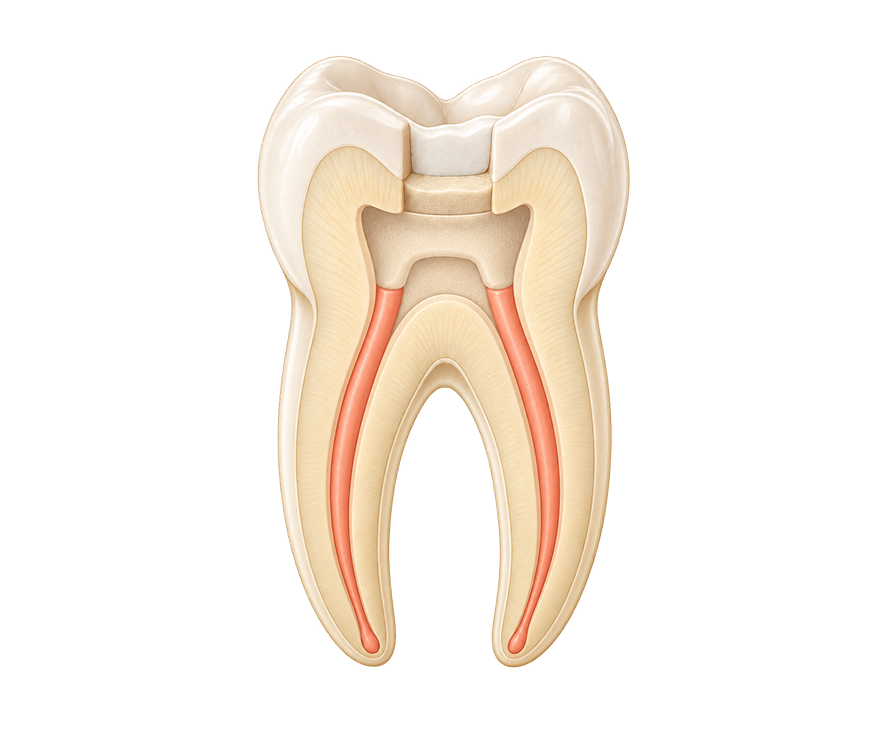
Root Canal Treatment Tooth Structure
01

Diagnosis

Confirm pulp and root condition through symptoms and examination

02

Root Canal Management

Necessary scope of removal, cleaning, and disinfection

03

Filling and Sealing

Fill the root canal and manage the risk of re-infection

04

Tooth Protection · Crown

Envelopes weakened teeth to prevent fracture and
Prevent re-infection

※ The necessity of a crown is individually determined considering factors such as tooth position, remaining tooth structure, and biting force.

Root Canal Treatment Q&A

  • A.

    No. We assess pain, nerve response, and infection status. If recovery is possible, we consider treatments that preserve the nerve.

  • A.

    We proceed while monitoring your response after anesthesia. If inflammation is severe, the anesthetic effect may not be sufficient, or pain may occur after treatment, so we adjust accordingly.

  • A.

    This is to thoroughly clean and disinfect the complex internal structure of the tooth root and to check its condition. The number of visits varies depending on the extent of infection and the tooth structure.

  • A.

    It is determined by the tooth's position, remaining structure, and biting force. For molars, in particular, crowns are often considered to reduce the risk of fracture.

Sungmin Ko

Sungmin Ko

Chief Director
Jihyun Park

Jihyun Park

Chief Director
Soyoon Won

Soyoon Won

Executive Director
Yiyeon Han

Yiyeon Han

Orthodontist