Gradual Professional Whitening Considering Tooth Sensitivity: A Case of Shade Improvement from A1 to BL4
This is a professional whitening case for a patient who experienced mild tooth sensitivity to cold food and during brushing, and was concerned about the overall yellow shade of their teeth. Starting from a shade close to A1, gingival protection was applied, followed by gradual whitening with moderate intensity for 15 minutes and strong intensity for 15 minutes. Mild sensitivity appeared during the second cycle, so further treatment was stopped. Ultimately, a shade close to BL4 was achieved.
Dentist in Charge Jihyun Park Chief Director
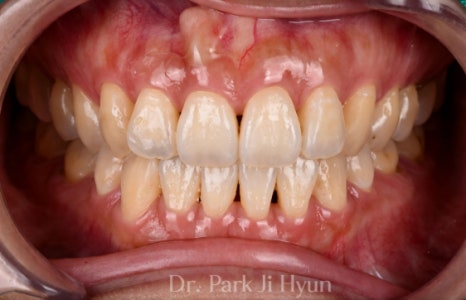
1Pre-treatment Condition · Diagnosis
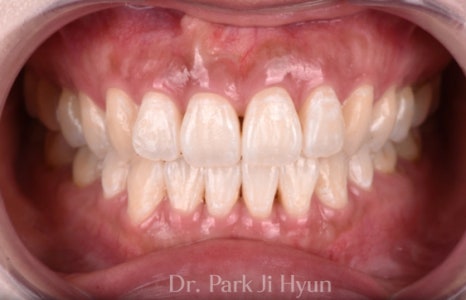
Before treatment, the tooth shade was close to A1, but the relatively high yellow chroma made the patient feel that their overall tooth color was dark.
The patient usually experienced mild tooth sensitivity when consuming cold food or brushing, and this was their first professional tooth whitening treatment.
Considering the patient's existing tooth sensitivity, we planned a gradual treatment rather than applying high-intensity whitening from the start. We checked for shade changes and sensitivity after each whitening cycle.
2Treatment Methods
Gingival barrier was applied along the gum line and light-cured to form a protective barrier. Lips and cheeks were isolated, and moisture control was performed.
The first whitening cycle was performed for 15 minutes with light intensity level 2 (medium).
After the first whitening, we confirmed that the tooth shade had brightened and checked with the patient for any sensitivity or discomfort.
After confirming that the patient had no particular symptoms, the second cycle was performed for 15 minutes with light intensity increased to level 3 (strong).
Mild sensitivity occurred near the end of the second whitening, so no additional whitening was performed on that day, and the treatment was concluded.
Ultimately, a tooth shade close to BL4 was achieved.
3Treatment Process
The pre-treatment tooth shade was confirmed to be close to A1.
Overall, the yellow chroma was relatively high, and the patient experienced mild sensitivity when consuming cold food or brushing.
Accordingly, a treatment plan was established to gradually adjust the whitening intensity.
Step 2. Gingival Barrier Application and Moisture Control
Gingival barrier was applied along the gum line to prevent direct contact of the whitening agent with the gums.
After forming a protective barrier through light-curing, the lips and cheeks were isolated, and moisture control was performed to prevent saliva from touching the treatment area.
Step 3. First Professional Whitening Session
The first whitening cycle was performed for 15 minutes with light intensity level 2 (medium).
After treatment, a brighter shade was observed compared to the initial shade which was close to A1.
Step 4. Sensitivity Check After First Whitening
After the first whitening cycle, the patient was checked for sensitivity and discomfort.
The patient reported no particular symptoms, and based on this, it was decided to proceed with additional whitening.
Step 5. Second Professional Whitening Session
In the second cycle, the light intensity was increased to level 3 (strong) and performed for 15 minutes.
Near the end of the procedure, the patient complained of slight sensitivity.
Step 6. Final Shade Confirmation and Treatment Completion
The treatment was concluded after the second cycle on the same day, without further whitening.
Ultimately, a tooth shade close to BL4 was achieved.
Patients were informed of precautions regarding temporary white spots or opaque areas that may be observed on some tooth surfaces immediately after whitening.
4Post-treatment Condition
The tooth shade, which was close to A1 before treatment, brightened after the first whitening, and after completing the second cycle, a final shade close to BL4 was achieved.
There were no particular sensitivity symptoms after the first cycle, but mild sensitivity occurred near the end of the second cycle, so no additional whitening was performed.
Immediately after whitening, temporary white spots or opaque areas may be observed on the tooth surface, which can be caused by dehydration or other factors.
Precautions regarding shade maintenance and sensitivity management after whitening were provided.
Treatment Details
Is whitening possible even with sensitive teeth?
Patients who experience tooth sensitivity when eating cold food or brushing may worry that whitening will worsen their symptoms.
While not all whitening treatments are impossible with tooth sensitivity, it is crucial to identify the cause and extent of existing sensitivity before deciding on a treatment method.
The patient in this case was relatively young and was concerned about the overall yellow shade of their teeth.
Before treatment, the shade was close to A1, but the relatively high yellow chroma made the overall tooth shade feel dark.
Additionally, the patient experienced mild sensitivity when consuming cold food or brushing, and this was their first professional whitening.
Accordingly, whitening was performed gradually, checking the patient's response, rather than applying high intensity from the start.
Tooth Shade Value and Chroma
When evaluating tooth shade, it is important to consider not only the lightness and darkness but also the characteristics of the color.
Value refers to the brightness of the tooth, and Chroma refers to how intensely a specific color appears.
Even if the tooth's value is relatively high, a high yellow chroma can make the overall appearance seem dark or yellowish.
In this case, the pre-treatment shade was close to A1, but the prominent yellow color led the patient to desire aesthetic improvement.
Gingival Barrier Application Before Tooth Whitening
In professional tooth whitening, it is crucial to protect the gums from direct contact with the whitening agent.
This is because contact with the whitening agent can cause temporary irritation or shade changes in the gums.
In this case, a gingival barrier was applied along the gum line and light-cured to form a protective barrier.
Afterward, the lips and cheeks were isolated, and moisture control was performed to prevent saliva from touching the treatment area before proceeding with whitening.
Step-by-Step Whitening Based on Patient Response
In this case, instead of high-intensity whitening in one go, we monitored shade changes and tooth sensitivity after each cycle.
The first cycle was performed for 15 minutes at light intensity level 2 (medium).
After the first whitening, we confirmed that the tooth shade had brightened and checked for any sensitivity or discomfort reported by the patient.
Based on the patient's response of no particular symptoms, the second cycle was performed for 15 minutes at light intensity level 3 (strong).
Towards the end of the second cycle, slight sensitivity appeared, so no additional whitening was performed on that day.
The treatment was finally completed with a shade close to BL4.
Reasons for White Spots Appearing After Whitening
Immediately after professional whitening, some areas of the tooth surface may appear whiter or more opaque than usual.
Temporary reduction of moisture on the tooth surface during the whitening process can make subtle existing shade differences in the enamel more prominent.
These changes often subside as the tooth rehydrates.
However, not all white spots are due to temporary dehydration, so if spots persist or are accompanied by other symptoms, additional examination may be necessary.
Post-Whitening Care and Precautions
After tooth whitening, it is advisable to be cautious about consuming highly pigmented foods and drinks for a certain period.
Foods that can cause staining, such as coffee, wine, and curry, can be adjusted according to the dental professional's guidance.
Furthermore, if sensitivity persists or worsens after whitening, it is important not to endure it unnecessarily and to seek dental care.
Whitening results can vary depending on individual tooth condition and lifestyle habits, and the shade may change again over time.
Therefore, regular check-ups and appropriate maintenance are necessary to preserve the tooth shade long-term.
Please check before treatment
※ The photos posted are actual treatment cases published with the patient's consent and have not been retouched or composited for advertising purposes.
※ Treatment results may vary depending on the patient's oral condition, general health, and lifestyle, and identical results are not guaranteed.
※ Side effects such as pain, swelling, bleeding, infection, prosthetic fracture, or nerve damage may occur during the treatment process.
※ For detailed information, please consult sufficiently with your attending medical staff before making a decision.
No previous post.
View Clinical Cases
Enter simple information to view cases