Treatment Details
Hello, I am the Chief Director of Seoul Yido Dental Clinic.
Chief Director and Prosthodontist at Seoul Yido Dental Clinic.
Many people likely found this article because they are concerned about their front tooth appearing too long after an implant.
Many people likely found this article because they are concerned about their front tooth appearing too long after an implant.
If the gum in that area has receded significantly, making it uneven with adjacent teeth,
it can be a source of great distress.
The gum around the front teeth is very delicate.
With each surgery, the bone and gum gradually diminish,
and if a problem arises in the surgical area, the gum can recede much faster than expected.
and if a problem arises in the surgical area, the gum can recede much faster than expected.
Therefore, for front teeth,
✓ Choosing a surgical method suitable for the patient's situation,
✓ Performing that surgery with high precision,
✓ And refining the gum contour with a prosthesis after surgery,
are all necessary to create a natural-looking front tooth.
Thus, for front teeth, both surgery and prosthetics rely heavily on the dentist's skill.
Thus, for front teeth, both surgery and prosthetics rely heavily on the dentist's skill.
Among those reading this article, there may be some who are living with a long prosthesis due to gum recession.
Among those reading this article, there may be some who are living with a long prosthesis due to gum recession.
Today, I would like to introduce a case where we helped such a patient recover through gum grafting and re-prosthesis.
Today, I would like to introduce a case where we helped such a patient recover through gum grafting and re-prosthesis.
It was originally just a broken area.
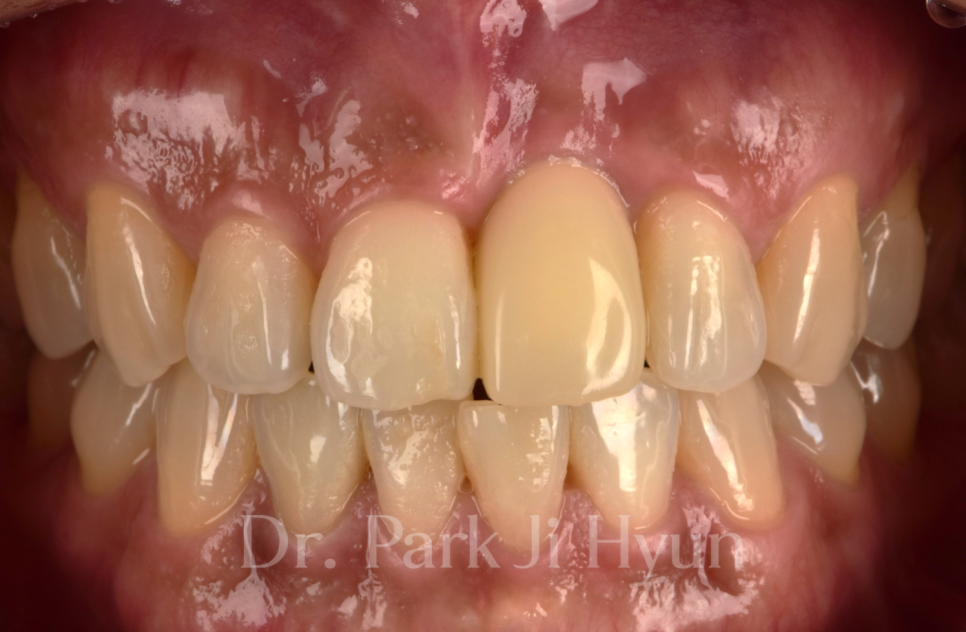
This patient came to us surprised that their tooth had become too long after receiving a front tooth implant and temporary prosthesis elsewhere.
This patient came to us surprised that their tooth had become too long after receiving a front tooth implant and temporary prosthesis elsewhere.
There was no significant problem with the original tooth length.
There was no inflammation; it was simply a case where the tooth fractured, leading to an implant.
However, during the surgical process, the gum collapsed, resulting in the need for a long prosthesis.
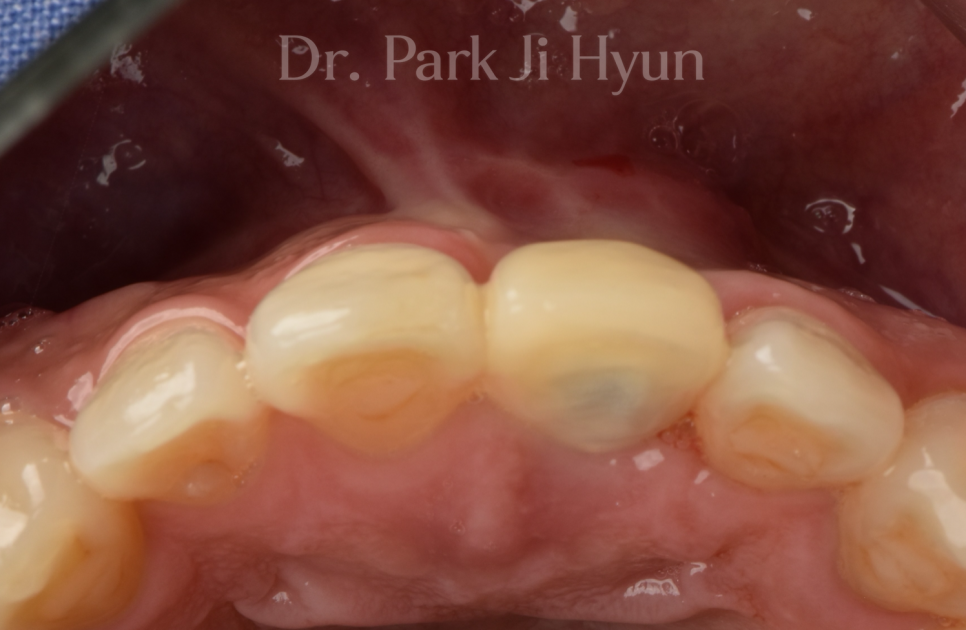
Looking from above, you can see that the gum has not only decreased in height but also sunken significantly sideways.
Looking from above, you can see that the gum has not only decreased in height but also sunken significantly sideways.
In cases where both height and thickness are lost like this,
prosthetics alone have limitations,
so gum grafting must be performed.
Before surgery, first, create space for the gum to grow.
Here, I did not proceed directly to surgery.
There was something I did before the surgery.
I first worked on creating space for the gum to grow.
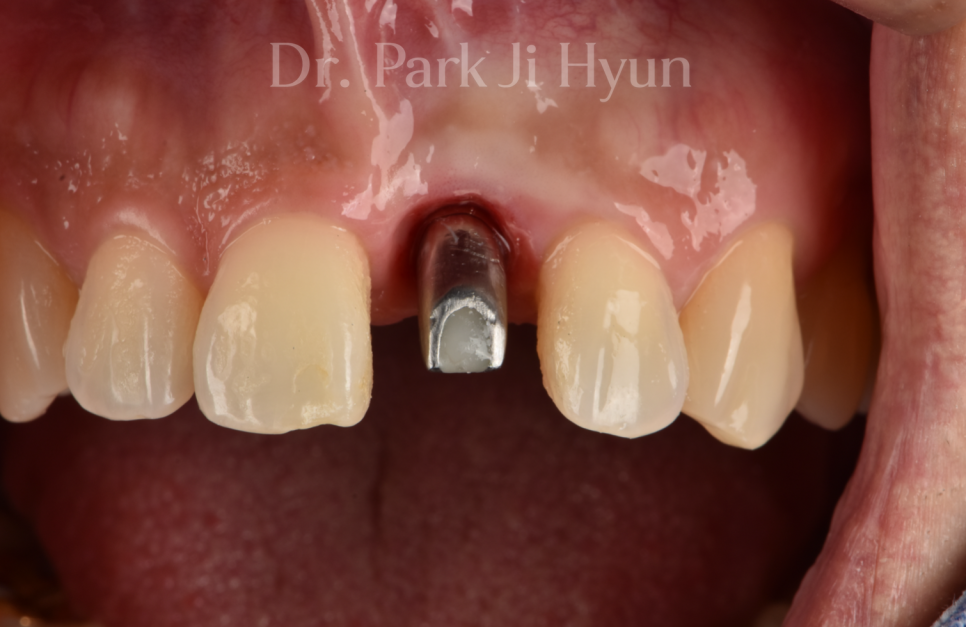
First, the abutment,
which is the post that goes on top of the implant, is thinned.
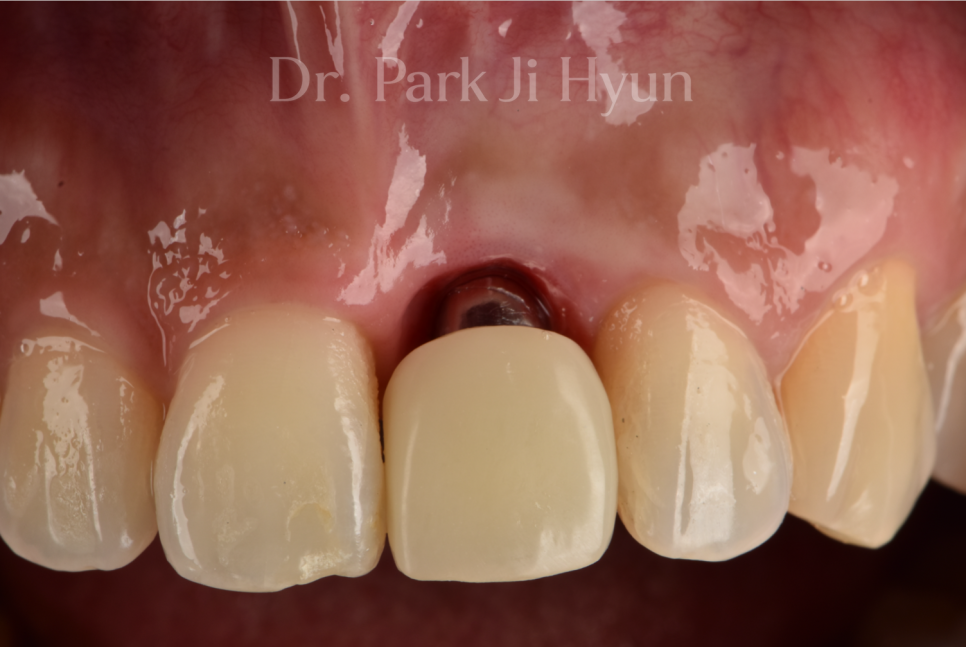
And the temporary prosthesis was remade to be about 1-2mm shorter than the adjacent tooth.

This is how it looked after two months, just by changing the shape of the prosthesis.
For the grafted gum to survive well,
there must be ample space for blood supply at the base.
In technical terms, this is called the recipient bed.
To explain it more simply, it's like preparing a wide bed of soil for a plant transplanted into a pot to take root.
To explain it more simply, it's like preparing a wide bed of soil for a plant transplanted into a pot to take root.
If the post is thick and the prosthesis is long, there will be no space for the gum to grow, right?
Therefore, we first moved the metal post and prosthesis out of the way,
and prepared that space for the gum to fill.
and prepared that space for the gum to fill.
Gum grafting: Design is paramount.

Once an adequate amount of gum tissue has recovered,
we proceed with the main preparation for the graft.
How much gum tissue to remove, how to open and close the surgical site.
All of these steps are meticulously planned
before the surgery begins.
It is difficult to expect good results from a poorly designed surgery.
It is difficult to expect good results from a poorly designed surgery.
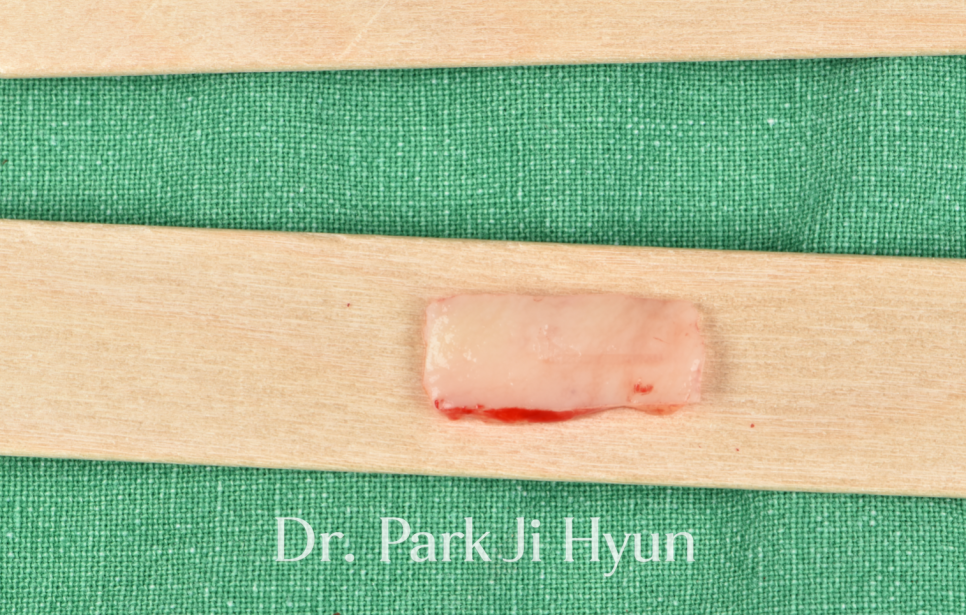
The gum tissue was harvested from the patient's palate,
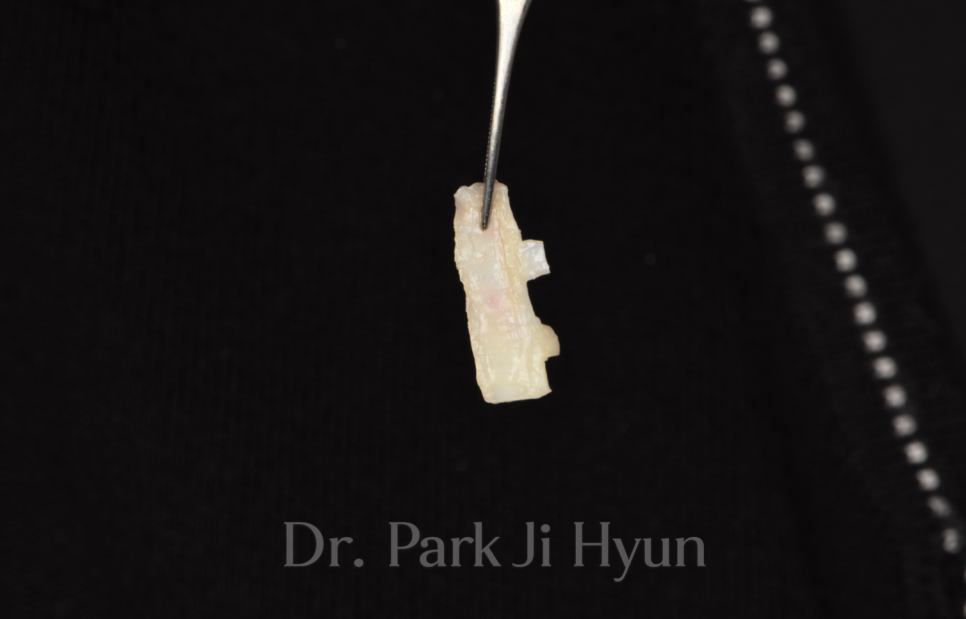
and shaped to fit the recipient site.
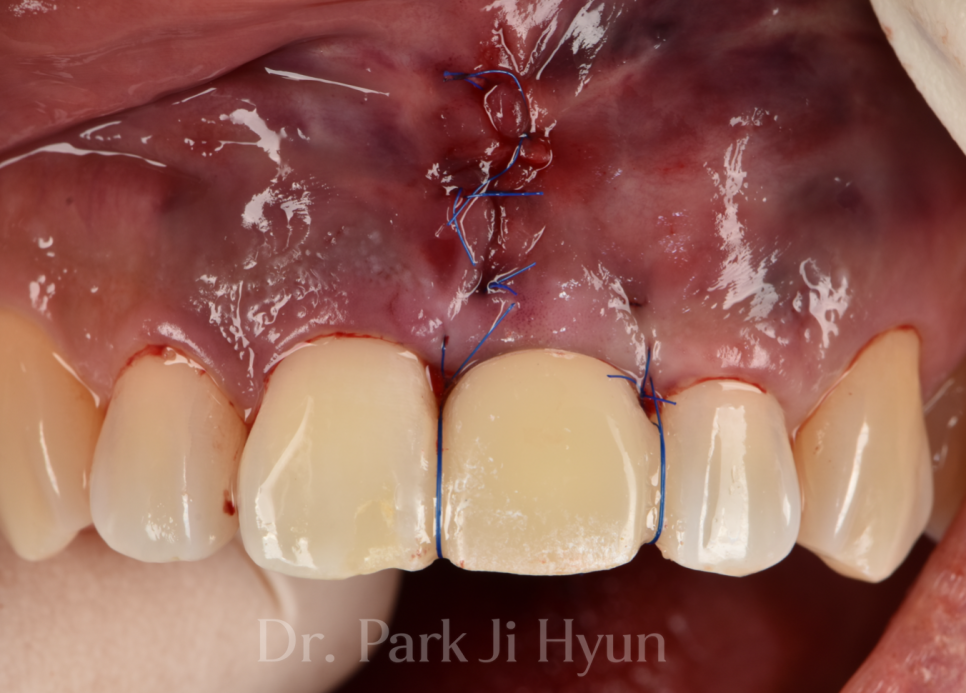
This is how the surgery concluded.
Why the crown was made shorter
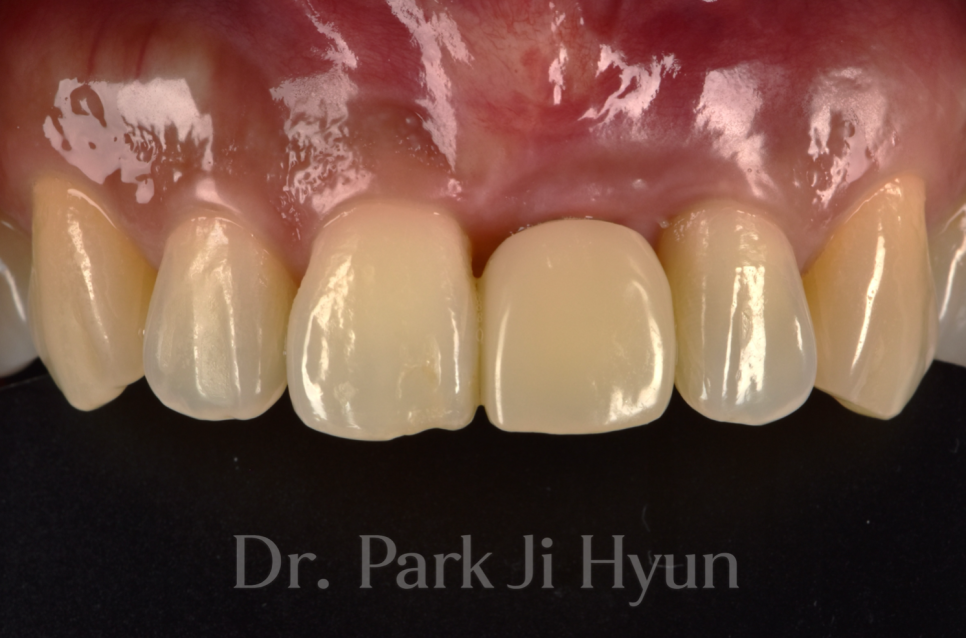
Immediately after surgery, gum tissue tends to shrink slightly as it heals.
By performing the surgery to match a pre-shortened prosthesis, the gum tissue will recede
and settle precisely at my target height.
This is precisely why the prosthesis was initially made shorter.
I always respect the patient's choices.
I informed this patient that two surgeries might be necessary initially.
However, they were quite satisfied with the first outcome and did not wish for additional treatment.
Therefore, we decided to adjust the remaining part with a prosthesis.

The neck of the prosthesis was shaped
to match the recovered gum tissue.
Treatment Results

Four months after surgery,
the final prosthesis has been completed.
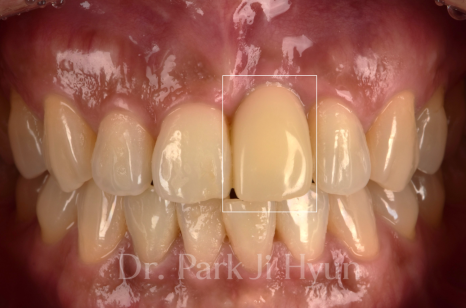
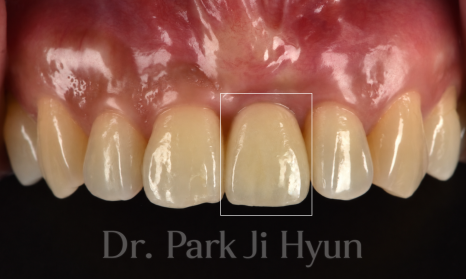
You can see that the previously long-looking front tooth now matches the length of the adjacent teeth,
and not only the implant site but also the gum tissue of the adjacent teeth
has significantly recovered.
If another surgery had been performed,
the results might have been even better,
but since the patient was already very satisfied, I was proud
to complete the treatment.
Even if your gums have already receded,
I hope you won't be too disheartened.
Because, as in today's case, lost gum tissue can often be restored through gum grafting
and reshaping with prosthetics.
Furthermore, the front teeth are a challenging area that requires
extensive study and training.
If you are considering a front tooth implant, I recommend seeking treatment from a facility that meets these criteria,
to receive proper care from surgery to prosthetics, all at once.
This has been Dr. Jihyun Park,
Prosthodontist at Seoul Yido Dental Clinic.
Thank you.