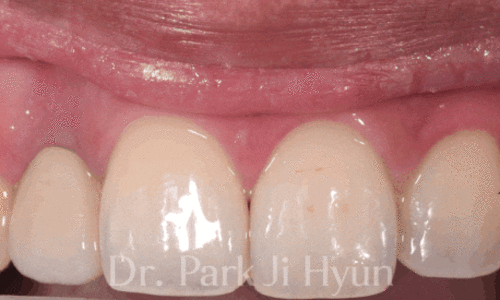
Crowns with Awkward Color and Shape Next to Your Teeth at Mapo Station Dental Clinic? This is How a Prosthodontist Matches Them.
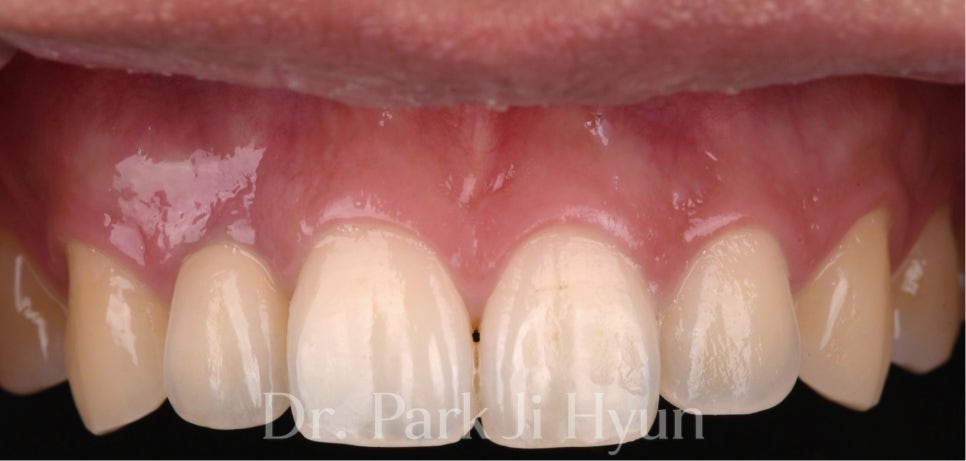
This is the process of creating an aesthetic prosthesis to improve the problem of an anterior crown appearing mismatched in color and shape with the surrounding natural teeth. We designed the tooth shape with diagnostic wax-up, and precisely confirmed harmony with surrounding teeth through polarized photography, color analysis, and Digital Try-in.
Dentist in Charge Jihyun Park Chief Director
1Pre-treatment Condition · Diagnosis
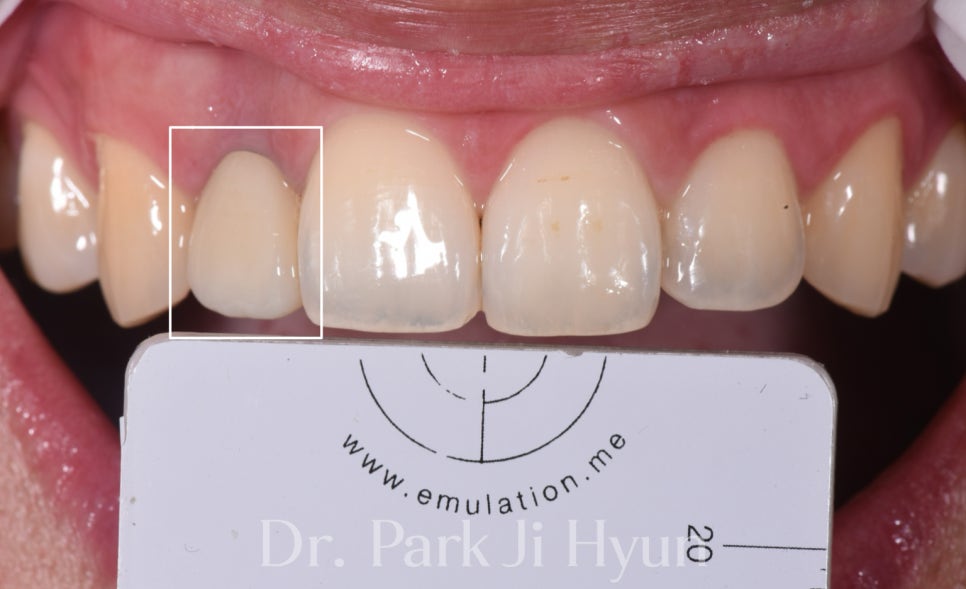
If an existing anterior crown doesn't match the shape or color of the surrounding natural teeth, it can be obvious that a prosthesis has been placed. For a natural-looking aesthetic prosthesis, it's necessary to analyze not only the size and shape of the tooth but also its color, translucency, and surface texture.
2Treatment Methods
We designed the tooth shape with a diagnostic wax-up and captured the natural tooth color using a polarizing filter. Subsequently, we analyzed the L·a·b color values and pre-confirmed the color harmony between the final prosthesis and surrounding teeth with Digital Try-in.
3Treatment Process
First, we designed a shape that harmonizes with the natural tooth on the opposite side through a diagnostic wax-up.
We took photographs of the tooth with reduced light reflection using a polarizing filter and analyzed the color using L·a·b values.
After creating a model that reflects the color of the surrounding teeth and the abutment inside the crown, we attached the completed prosthesis to the model and photographed it.
We then composited this photo with an actual intraoral photo to check for color differences, adjusted as needed, and finally confirmed it in the oral cavity.
4Post-treatment Condition
Through Digital Try-in, we pre-confirmed and adjusted color differences with surrounding teeth during the fabrication stage. Afterwards, we performed a final check in the oral cavity to ensure the color and shape of the prosthesis harmonized with the surrounding natural teeth.
Treatment Details
Hello,
This is Jihyun Park,
Chief Director and Prosthodontist at Seoul Yido Dental Clinic.
Regarding the anterior tooth that appeared dark in the previous case,
and how we re-treated it,
I mentioned that I would explain what DTI (Digital Try-in) is
in the next post, didn't I?
Hello. I am Jihyun Park, a prosthodontist and the chief director of Seoul Yido Dental Clinic.
Why Do Anterior Crowns Look Unnatural?
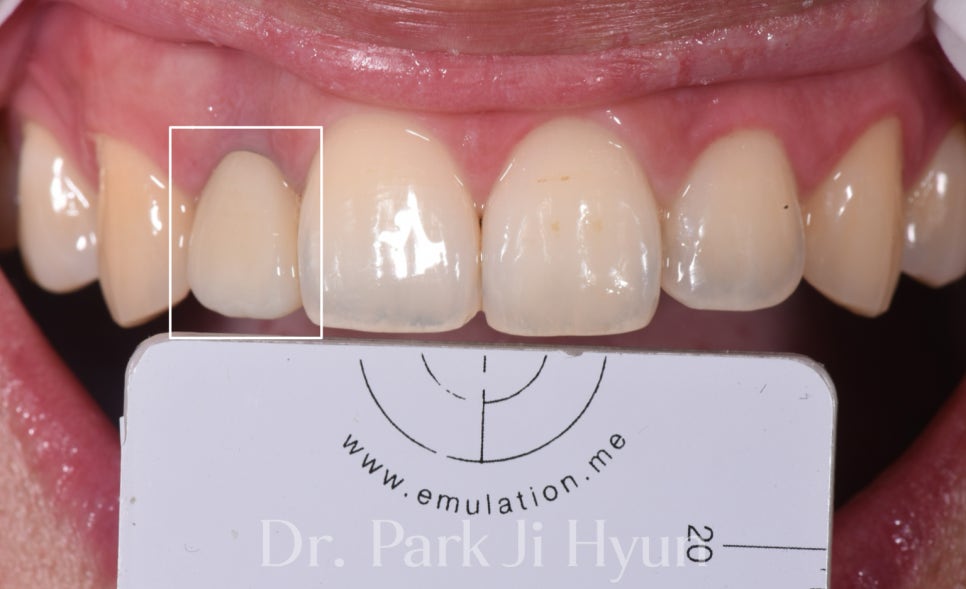
I mentioned that many people
are stressed because their previously treated anterior crowns
look somewhat unnatural in both shape and color,
more than you might think.
For an anterior crown to look truly natural,
two main things must be correct.
✓ Shape
✓ Color
If even one of these is off,
in the highly visible anterior region,
the unnaturalness will be immediately noticeable.
Shape Starts with a Blueprint
Let's now take a closer look at the process
of creating natural anterior teeth.

For shape, we first create a blueprint
with a diagnostic wax-up.
We sculpt it on a model beforehand
to achieve a look as similar as possible
to the corresponding tooth on the opposite side.
Both temporary teeth and final prostheses
are made following this blueprint.
However, since I've already discussed
the aspects of shape sufficiently in previous posts,
today I will focus on color.
Color is Accurately Captured

To match the color well, it's essential to accurately record the reference color first.
The process of capturing tooth color in the patient's mouth
is called shade taking.
The tooth surface is smooth, causing light to reflect brightly.
This reflection can make the tooth color in photos appear different from reality.
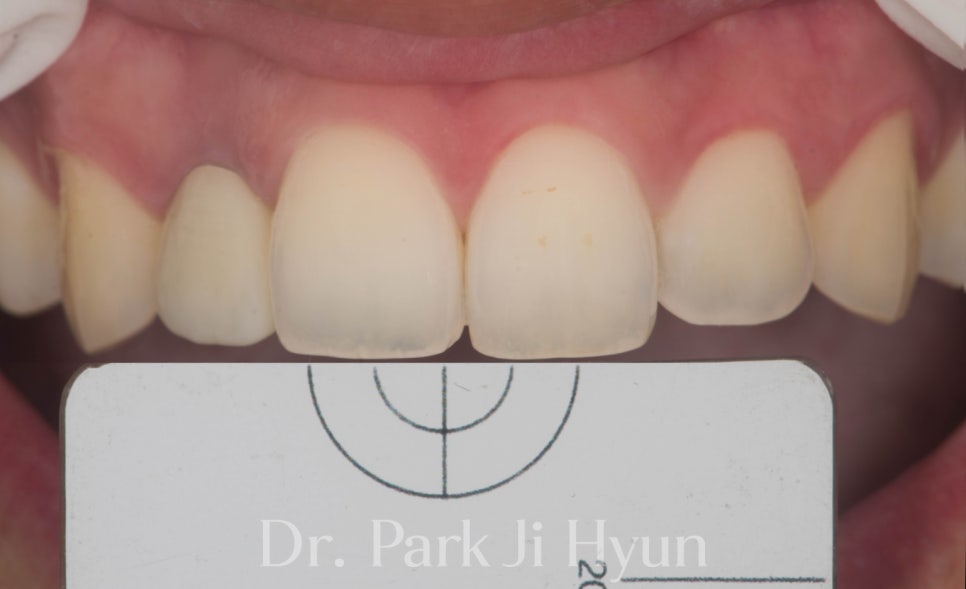
Therefore, we use a polarizing filter
to eliminate surface reflections
and photograph the tooth's inherent color.
With the photos obtained this way, we confirm the color
using L·a·b values, which are three numbers
representing brightness and chroma.
This ensures that the color captured is based on
objective criteria, not guesswork,
and is then communicated to the dental laboratory.
We Create a Model That Replicates the Oral Cavity

Once the color is accurately captured, the next step is to create a Digital Try-in model.
(What Digital Try-in is will be explained immediately after this.)
We create a model identical to the patient's mouth, including the surrounding teeth,
and produce the crown's post in a color as close to the actual tooth as possible.
This is because ceramic crowns are made of a material that allows light to pass through slightly, so they are affected by the color of the underlying and adjacent areas.
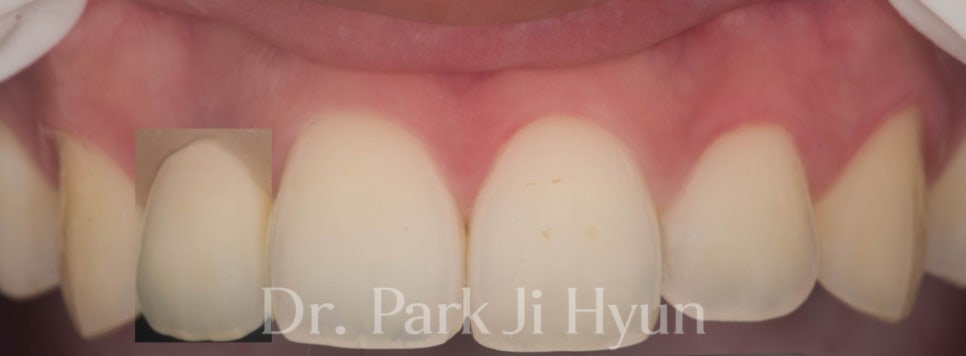

Now, with the completed prosthesis fitted onto the model, we take photos under the same conditions as the patient's mouth.
Then, we cut out the prosthesis photo on the computer and paste it onto the patient's intraoral photo.
This allows us to pre-evaluate how well the prosthesis will blend with the surrounding teeth in the actual mouth.
We call this process Digital Try-in.
It's similar to holding paint samples against an actual wall to choose a color before painting the entire wall.
For your information, Kim Byung-hee, the head of our dental laboratory at Seoul Yido Dental Clinic, is a veteran specialist who has given numerous lectures
on the topic of Digital Try-in.
Can't we just try it on?
That's right. If we just try it on, the process becomes simpler.
However, if the color doesn't match when first checked in the mouth, it has to be sent back to the lab,
and the patient would have to visit again.
Digital Try-in allows us to greet the patient with a prosthesis that has been thoroughly matched in the lab before the patient arrives,
making their dental visit more comfortable.
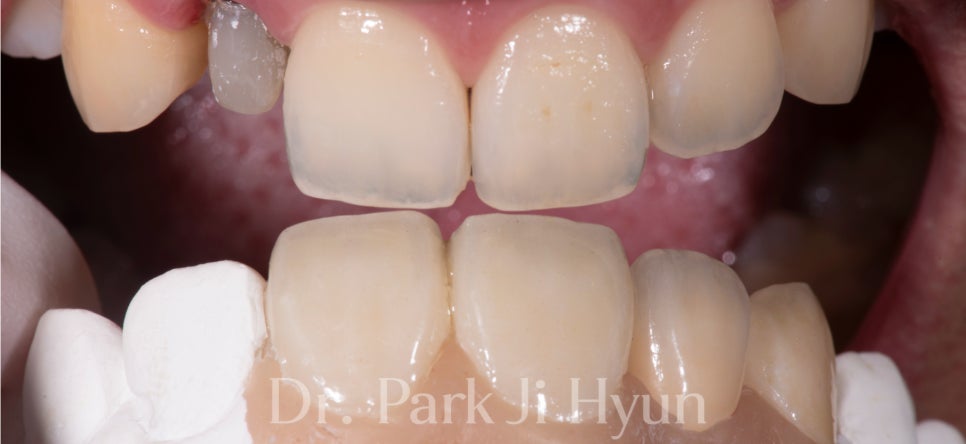
If you place the model next to the actual tooth and photograph them side-by-side, you can see the difference at a glance.
Results confirmed in the mouth
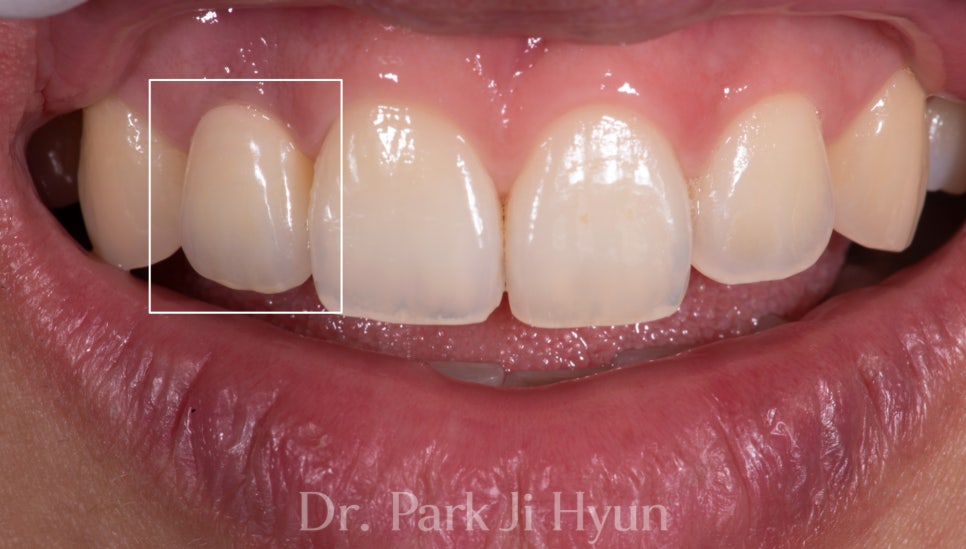
Prostheses crafted with such care often exhibit
a color very similar to the surrounding teeth when placed in the mouth.

Let's review the process I've described today:
✓ Form design with diagnostic wax-up
✓ Pre-treatment shade taking
✓ Polarized filter photos and L·a·b value confirmation
✓ Production of a try-in model replicating the mouth
✓ Color comparison with composite photos
✓ Final confirmation in the mouth
A single anterior crown goes through this many steps.
And I convey to the dental laboratory
✓ specific concerns of the patient
✓ the extent visible when smiling
✓ notes on the translucency and subtle patterns of adjacent teeth
along with these details.
When the try-in photos arrive, the head of the lab and I review them one by one and exchange opinions.
Of course, sometimes the color doesn't match on the first try.
In such cases, we readjust the surface texture and translucency and check again.
As I repeatedly emphasize, even a very small difference in anterior teeth
can reveal that a crown has been placed.
I also believe that these processes are absolutely essential to avoid that.
Therefore, Seoul Yido Dental Clinic places more importance on whether a prosthesis can blend naturally, like the original tooth,
rather than simply completing it.
This is also why we meticulously check each aspect: form, color, translucency, and surface texture.
Even if it requires a little more effort and additional verification steps,
the goal is that when a patient looks in the mirror, the treated tooth doesn't stand out first.
This is what we consider important when creating anterior prostheses.
I'd like to conclude today's article here.
Thank you for always reading, and I hope this has been helpful to those who are experiencing stress
due to awkward crowns or prostheses.
This has been Jihyun Park, a prosthodontist at Seoul Yido Dental Clinic.
Guidance on Aesthetic Anterior Prosthesis Production Using Digital Try-in →
Thank you.

Frequently Asked Questions
It could be due to differences in the crown's color, shape, or translucency compared to the surrounding natural teeth. Especially for anterior teeth, which are highly visible, even small color differences or shape imbalances can appear unnatural.
Yes. Remaking can be considered depending on the material and condition of the current crown. Whether it can be improved with simple surface color adjustments or if a new prosthesis needs to be made must be determined after an examination.
It is possible. However, since each natural tooth has different colors and translucencies, matching just one crown can be more challenging. Precise analysis of the surrounding tooth colors and repeated verification during the production process are crucial.
We create a model identical to the patient's mouth, including the surrounding teeth, and produce the crown's post in a color as close to the actual tooth as possible. This is because ceramic crowns are made of a material that allows light to pass through slightly, so they are affected by the color of the underlying and adjacent areas. Now, with the completed prosthesis fitted onto the model, we take photos under the same conditions as the patient's mouth. Then, we cut out the prosthesis photo on the computer and paste it onto the patient's intraoral photo. This allows us to pre-evaluate how well the prosthesis will blend with the surrounding teeth in the actual mouth. We call this process Digital Try-in. It's similar to holding paint samples against an actual wall to choose a color before painting the entire wall. For your information, Kim Byung-hee, the head of our dental laboratory at Seoul Yido Dental Clinic, is a veteran specialist who has given numerous lectures on the topic of Digital Try-in. Can't we just try it on? That's right. If we just try it on, the process becomes simpler. However, if the color doesn't match when first checked in the mouth, it has to be sent back to the lab, and the patient would have to visit again. Digital Try-in allows us to greet the patient with a prosthesis that has been thoroughly matched in the lab before the patient arrives, making their dental visit more comfortable. If you place the model next to the actual tooth and photograph them side-by-side, you can see the difference at a glance. Results confirmed in the mouth Prostheses crafted with such care often exhibit a color very similar to the surrounding teeth when placed in the mouth. Let's review the process I've described today: ✓ Form design with diagnostic wax-up ✓ Pre-treatment shade taking ✓ Polarized filter photos and L·a·b value confirmation ✓ Production of a try-in model replicating the mouth ✓ Color comparison with composite photos ✓ Final confirmation in the mouth A single anterior crown goes through this many steps. And I convey to the dental laboratory ✓ specific concerns of the patient ✓ the extent visible when smiling ✓ notes on the translucency and subtle patterns of adjacent teeth along with these details. When the try-in photos arrive, the head of the lab and I review them one by one and exchange opinions. Of course, sometimes the color doesn't match on the first try. In such cases, we readjust the surface texture and translucency and check again. As I repeatedly emphasize, even a very small difference in anterior teeth can reveal that a crown has been placed. I also believe that these processes are absolutely essential to avoid that. Therefore, Seoul Yido Dental Clinic places more importance on whether a prosthesis can blend naturally, like the original tooth, rather than simply completing it. This is also why we meticulously check each aspect: form, color, translucency, and surface texture. Even if it requires a little more effort and additional verification steps, the goal is that when a patient looks in the mirror, the treated tooth doesn't stand out first. This is what we consider important when creating anterior prostheses. I'd like to conclude today's article here. Thank you for always reading, and I hope this has been helpful to those who are experiencing stress due to awkward crowns or prostheses. This has been Jihyun Park, a prosthodontist at Seoul Yido Dental Clinic. Guidance on Aesthetic Anterior Prosthesis Production Using Digital Try-in → Q1. My anterior crown is a different color from the adjacent tooth. Can it be matched naturally? Yes. We can analyze the color, translucency, and surface texture of the surrounding teeth to match it as naturally as possible. Digital Try-in allows us to pre-check and adjust color differences before final placement. Q2. What causes an anterior crown to look unnatural? It could be due to differences in the crown's color, shape, or translucency compared to the surrounding natural teeth. Especially for anterior teeth, which are highly visible, even small color differences or shape imbalances can appear unnatural. Q3. If I'm not satisfied with the color of my anterior crown, can it be remade? Yes. Remaking can be considered depending on the material and condition of the current crown. Whether it can be improved with simple surface color adjustments or if a new prosthesis needs to be made must be determined after an examination. Q4. Can the color of both adjacent teeth be matched even if only one anterior crown is made? It is possible. However, since each natural tooth has different colors and translucencies, matching just one crown can be more challenging. Precise analysis of the surrounding tooth colors and repeated verification during the production process are crucial. Q5. How does the dental clinic match the color of anterior crowns? We create a model identical to the patient's mouth, including the surrounding teeth, and produce the crown's post in a color as close to the actual tooth as possible. This is because ceramic crowns are made of a material that allows light to pass through slightly, so they are affected by the color of the underlying and adjacent areas. Now, with the completed prosthesis fitted onto the model, we take photos under the same conditions as the patient's mouth. Then, we cut out the prosthesis photo on the computer and paste it onto the patient's intraoral photo. This allows us to pre-evaluate how well the prosthesis will blend with the surrounding teeth in the actual mouth. We call this process Digital Try-in. It's similar to holding paint samples against an actual wall to choose a color before painting the entire wall. For your information, Kim Byung-hee, the head of our dental laboratory at Seoul Yido Dental Clinic, is a veteran specialist who has given numerous lectures on the topic of Digital Try-in. Can't we just try it on? That's right. If we just try it on, the process becomes simpler. However, if the color doesn't match when first checked in the mouth, it has to be sent back to the lab, and the patient would have to visit again. Digital Try-in allows us to greet the patient with a prosthesis that has been thoroughly matched in the lab before the patient arrives, making their dental visit more comfortable. If you place the model next to the actual tooth and photograph them side-by-side, you can see the difference at a glance. Results confirmed in the mouth Prostheses crafted with such care often exhibit a color very similar to the surrounding teeth when placed in the mouth. Let's review the process I've described today: ✓ Form design with diagnostic wax-up ✓ Pre-treatment shade taking ✓ Polarized filter photos and L·a·b value confirmation ✓ Production of a try-in model replicating the mouth ✓ Color comparison with composite photos ✓ Final confirmation in the mouth A single anterior crown goes through this many steps. And I convey to the dental laboratory ✓ specific concerns of the patient ✓ the extent visible when smiling ✓ notes on the translucency and subtle patterns of adjacent teeth along with these details. When the try-in photos arrive, the head of the lab and I review them one by one and exchange opinions. Of course, sometimes the color doesn't match on the first try. In such cases, we readjust the surface texture and translucency and check again. As I repeatedly emphasize, even a very small difference in anterior teeth can reveal that a crown has been placed. I also believe that these processes are absolutely essential to avoid that. Therefore, Seoul Yido Dental Clinic places more importance on whether a prosthesis can blend naturally, like the original tooth, rather than simply completing it. This is also why we meticulously check each aspect: form, color, translucency, and surface texture. Even if it requires a little more effort and additional verification steps, the goal is that when a patient looks in the mirror, the treated tooth doesn't stand out first. This is what we consider important when creating anterior prostheses. I'd like to conclude today's article here. Thank you for always reading, and I hope this has been helpful to those who are experiencing stress due to awkward crowns or prostheses. This has been Jihyun Park, a prosthodontist at Seoul Yido Dental Clinic. Guidance on Aesthetic Anterior Prosthesis Production Using Digital Try-in → Q1. My anterior crown is a different color from the adjacent tooth. Can it be matched naturally? Yes. We can analyze the color, translucency, and surface texture of the surrounding teeth to match it as naturally as possible. Digital Try-in allows us to pre-check and adjust color differences before final placement. Q2. What causes an anterior crown to look unnatural? It could be due to differences in the crown's color, shape, or translucency compared to the surrounding natural teeth. Especially for anterior teeth, which are highly visible, even small color differences or shape imbalances can appear unnatural. Q3. If I'm not satisfied with the color of my anterior crown, can it be remade? Yes. Remaking can be considered depending on the material and condition of the current crown. Whether it can be improved with simple surface color adjustments or if a new prosthesis needs to be made must be determined after an examination. Q4. Can the color of both adjacent teeth be matched even if only one anterior crown is made? It is possible. However, since each natural tooth has different colors and translucencies, matching just one crown can be more challenging. Precise analysis of the surrounding tooth colors and repeated verification during the production process are crucial. Q5. How does the dental clinic match the color of anterior crowns? We create a model identical to the patient's mouth, including the surrounding teeth, and produce the crown's post in a color as close to the actual tooth as possible. This is because ceramic crowns are made of a material that allows light to pass through slightly, so they are affected by the color of the underlying and adjacent areas. Now, with the completed prosthesis fitted onto the model, we take photos under the same conditions as the patient's mouth. Then, we cut out the prosthesis photo on the computer and paste it onto the patient's intraoral photo. This allows us to pre-evaluate how well the prosthesis will blend with the surrounding teeth in the actual mouth. We call this process Digital Try-in. It's similar to holding paint samples against an actual wall to choose a color before painting the entire wall. For your information, Kim Byung-hee, the head of our dental laboratory at Seoul Yido Dental Clinic, is a veteran specialist who has given numerous lectures on the topic of Digital Try-in. Can't we just try it on? That's right. If we just try it on, the process becomes simpler. However, if the color doesn't match when first checked in the mouth, it has to be sent back to the lab, and the patient would have to visit again. Digital Try-in allows us to greet the patient with a prosthesis that has been thoroughly matched in the lab before the patient arrives, making their dental visit more comfortable. If you place the model next to the actual tooth and photograph them side-by-side, you can see the difference at a glance. Results confirmed in the mouth Prostheses crafted with such care often exhibit a color very similar to the surrounding teeth when placed in the mouth. Let's review the process I've described today: ✓ Form design with diagnostic wax-up ✓ Pre-treatment shade taking ✓ Polarized filter photos and L·a·b value confirmation ✓ Production of a try-in model replicating the mouth ✓ Color comparison with composite photos ✓ Final confirmation in the mouth A single anterior crown goes through this many steps. And I convey to the dental laboratory ✓ specific concerns of the patient ✓ the extent visible when smiling ✓ notes on the translucency and subtle patterns of adjacent teeth along with these details. When the try-in photos arrive, the head of the lab and I review them one by one and exchange opinions. Of course, sometimes the color doesn't match on the first try. In such cases, we readjust the surface texture and translucency and check again. As I repeatedly emphasize, even a very small difference in anterior teeth can reveal that a crown has been placed. I also believe that these processes are absolutely essential to avoid that. Therefore, Seoul Yido Dental Clinic places more importance on whether a prosthesis can blend naturally, like the original tooth, rather than simply completing it. This is also why we meticulously check each aspect: form, color, translucency, and surface texture. Even if it requires a little more effort and additional verification steps, the goal is that when a patient looks in the mirror, the treated tooth doesn't stand out first. This is what we consider important when creating anterior prostheses. I'd like to conclude today's article here. Thank you for always reading, and I hope this has been helpful to those who are experiencing stress due to awkward crowns or prostheses. This has been Jihyun Park, a prosthodontist at Seoul Yido Dental Clinic. Guidance on Aesthetic Anterior Prosthesis Production Using Digital Try-in → Q1. My anterior crown is a different color from the adjacent tooth. Can it be matched naturally? Yes. We can analyze the color, translucency, and surface texture of the surrounding teeth to match it as naturally as possible. Digital Try-in allows us to pre-check and adjust color differences before final placement. Q2. What causes an anterior crown to look unnatural? It could be due to differences in the crown's color, shape, or translucency compared to the surrounding natural teeth. Especially for anterior teeth, which are highly visible, even small color differences or shape imbalances can appear unnatural. Q3. If I'm not satisfied with the color of my anterior crown, can it be remade? Yes. Remaking can be considered depending on the material and condition of the current crown. Whether it can be improved with simple surface color adjustments or if a new prosthesis needs to be made must be determined after an examination. Q4. Can the color of both adjacent teeth be matched even if only one anterior crown is made? It is possible. However, since each natural tooth has different colors and translucencies, matching just one crown can be more challenging. Precise analysis of the surrounding tooth colors and repeated verification during the production process are crucial. Q5. How does the dental clinic match the color of anterior crowns? We create a model identical to the patient's mouth, including the surrounding teeth, and produce the crown's post in a color as close to the actual tooth as possible. This is because ceramic crowns are made of a material that allows light to pass through slightly, so they are affected by the color of the underlying and adjacent areas. Now, with the completed prosthesis fitted onto the model, we take photos under the same conditions as the patient's mouth. Then, we cut out the prosthesis photo on the computer and paste it onto the patient's intraoral photo. This allows us to pre-evaluate how well the prosthesis will blend with the surrounding teeth in the actual mouth. We call this process Digital Try-in. It's similar to holding paint samples against an actual wall to choose a color before painting the entire wall. For your information, Kim Byung-hee, the head of our dental laboratory at Seoul Yido Dental Clinic, is a veteran specialist who has given numerous lectures on the topic of Digital Try-in. Can't we just try it on? That's right. If we just try it on, the process becomes simpler. However, if the color doesn't match when first checked in the mouth, it has to be sent back to the lab, and the patient would have to visit again. Digital Try-in allows us to greet the patient with a prosthesis that has been thoroughly matched in the lab before the patient arrives, making their dental visit more comfortable. If you place the model next to the actual tooth and photograph them side-by-side, you can see the difference at a glance. Results confirmed in the mouth Prostheses crafted with such care often exhibit a color very similar to the surrounding teeth when placed in the mouth. Let's review the process I've described today: ✓ Form design with diagnostic wax-up ✓ Pre-treatment shade taking ✓ Polarized filter photos and L·a·b value confirmation ✓ Production of a try-in model replicating the mouth ✓ Color comparison with composite photos ✓ Final confirmation in the mouth A single anterior crown goes through this many steps. And I convey to the dental laboratory ✓ specific concerns of the patient ✓ the extent visible when smiling ✓ notes on the translucency and subtle patterns of adjacent teeth along with these details. When the try-in photos arrive, the head of the lab and I review them one by one and exchange opinions. Of course, sometimes the color doesn't match on the first try. In such cases, we readjust the surface texture and translucency and check again. As I repeatedly emphasize, even a very small difference in anterior teeth can reveal that a crown has been placed. I also believe that these processes are absolutely essential to avoid that. Therefore, Seoul Yido Dental Clinic places more importance on whether a prosthesis can blend naturally, like the original tooth, rather than simply completing it. This is also why we meticulously check each aspect: form, color, translucency, and surface texture. Even if it requires a little more effort and additional verification steps, the goal is that when a patient looks in the mirror, the treated tooth doesn't stand out first. This is what we consider important when creating anterior prostheses. I'd like to conclude today's article here. Thank you for always reading, and I hope this has been helpful to those who are experiencing stress due to awkward crowns or prostheses. This has been Jihyun Park, a prosthodontist at Seoul Yido Dental Clinic. Guidance on Aesthetic Anterior Prosthesis Production Using Digital Try-in → Q1. My anterior crown is a different color from the adjacent tooth. Can it be matched naturally? Yes. We can analyze the color, translucency, and surface texture of the surrounding teeth to match it as naturally as possible. Digital Try-in allows us to pre-check and adjust color differences before final placement. Q2. What causes an anterior crown to look unnatural? It could be due to differences in the crown's color, shape, or translucency compared to the surrounding natural teeth. Especially for anterior teeth, which are highly visible, even small color differences or shape imbalances can appear unnatural. Q3. If I'm not satisfied with the color of my anterior crown, can it be remade? Yes. Remaking can be considered depending on the material and condition of the current crown. Whether it can be improved with simple surface color adjustments or if a new prosthesis needs to be made must be determined after an examination. Q4. Can the color of both adjacent teeth be matched even if only one anterior crown is made? It is possible. However, since each natural tooth has different colors and translucencies, matching just one crown can be more challenging. Precise analysis of the surrounding tooth colors and repeated verification during the production process are crucial. Q5. How does the dental clinic match the color of anterior crowns?
Please check before treatment
※ This content explains the fabrication process of anterior aesthetic prosthetics, and actual treatment results may vary depending on the patient's tooth condition and prosthetic material.
※ Side effects such as tooth sensitivity, pain, gum inflammation, prosthetic fracture, or dislodgement may occur during crown treatment.
※ Even with Digital Try-in, a complete match in color and shape with surrounding natural teeth is not guaranteed.
※ Regular management is necessary as the harmony with the prosthetic may change after treatment due to changes in natural tooth color or gum condition.
※ Please consult sufficiently with your attending medical staff before treatment to determine the appropriate treatment method.
View Clinical Cases
Enter simple information to view cases