Why do old front tooth crowns appear dark?
Existing prosthetic materials containing metal or darkened abutment teeth after root canal treatment may show through, or the gums may recede, exposing the margin and making it appear dark.

This case involved retreating an old front tooth crown that had a grayish tint and asymmetrical gum line. The existing crown was removed, non-vital tooth bleaching was performed, and the gum and abutment tooth foundation were prepared before placing a new aesthetic crown.
Dentist in Charge Jihyun Park Chief Director
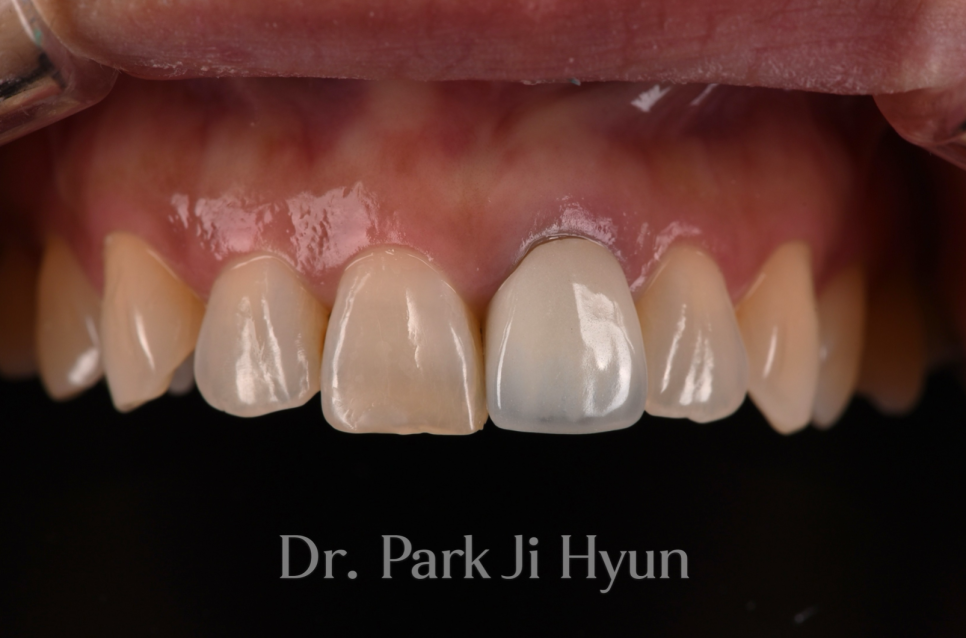
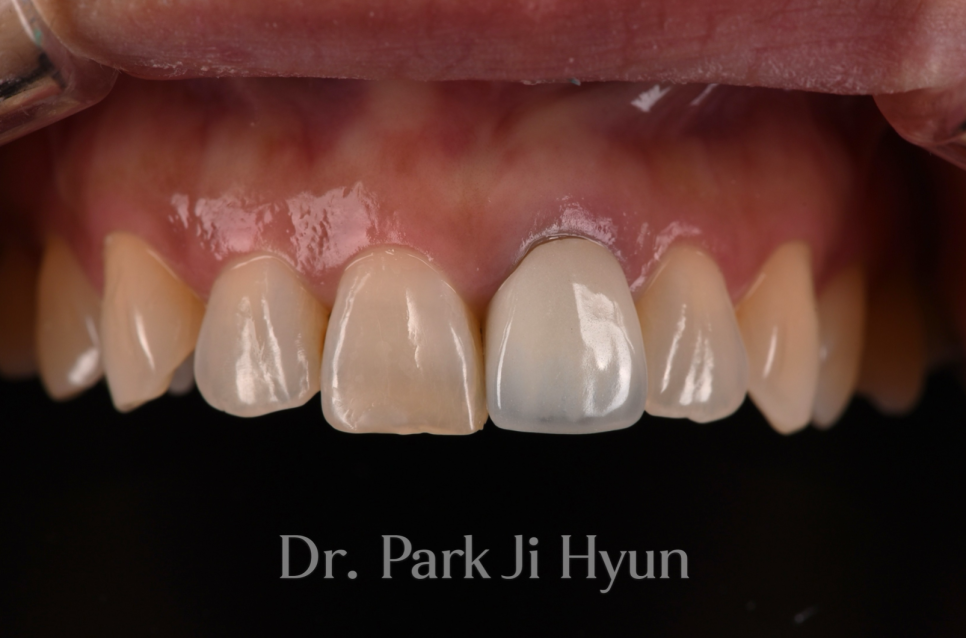
The gum line of the existing front tooth crown was higher than the opposite side, making the tooth appear longer. The crown had a dull, grayish tint, and the tooth's inclination and alignment were not harmonious with the facial midline. After crown removal, dark discoloration of the abutment tooth was also confirmed.
After first preparing the gum condition and the base color of the abutment tooth, the final prosthetic form was designed. For the abutment tooth that had darkened after root canal treatment, non-vital tooth bleaching was performed first to secure a foundation for creating a crown with natural translucency.
Existing crown removal and condition check → Non-vital tooth bleaching of abutment tooth → Stabilization of gum and abutment tooth foundation → Tooth shape and shade design → Final aesthetic crown fabrication and placement
The dark base color of the abutment tooth brightened, allowing the new crown's color and translucency to match the surrounding natural teeth more naturally. The restoration was performed considering the harmony of the gum line and tooth shape.
Treatment Details
Hello. I am Jihyun Park, a prosthodontist and the chief director of Seoul Yido Dental Clinic.
Many people experience these changes over time after getting a front tooth crown: ✓ The gum line appears dark, ✓ The gums recede, making the tooth look longer, ✓ The color appears duller than adjacent teeth. The common cause of these changes is within the crown's
interior. Therefore, if I had to choose the most important thing in retreatment, I would unhesitatingly say 'the sequence.' This is because what you address first determines the outcome, more than how beautifully you make the new crown.
Let's explore the related content step by step. Problems that cannot be solved by a new crown alone at Edae Station Dental Clinic.
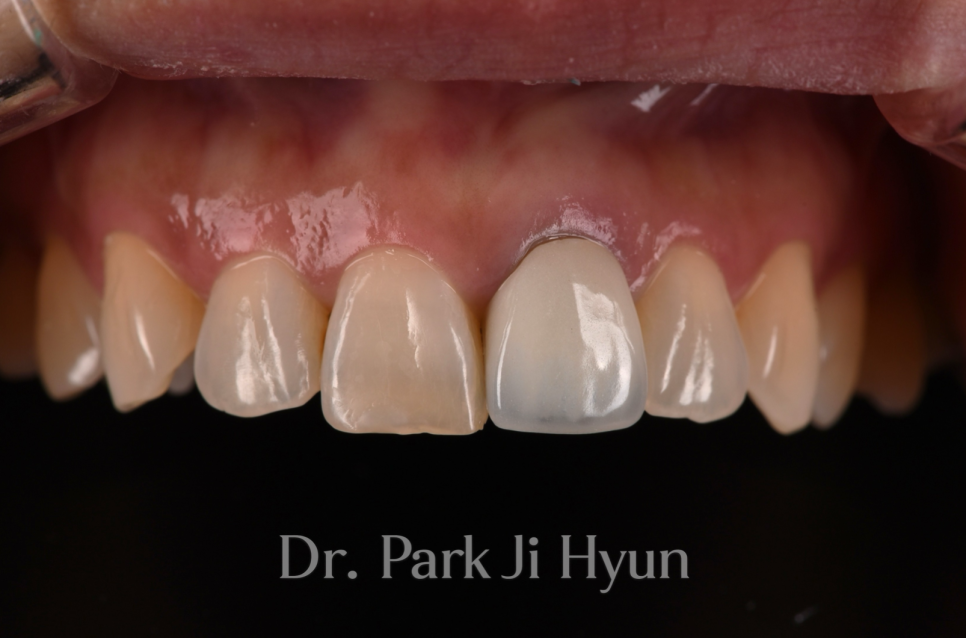
Initial Examination Photos: Looking at the photos, you'll notice that the crown on the left front tooth doesn't blend with the adjacent teeth and appears to stand out. There were three main issues.
✓ The gum line was higher than the opposite side, making the tooth appear longer, ✓ The crown had a dull, grayish tint, causing the tooth to appear dark all the way to the tip, and ✓ The tooth's inclination and alignment did not match the facial midline. As mentioned earlier, both the receding gum and the darkened inner tooth were problems originating from within.
Crown retreatment is built from the bottom up at Edae Station Dental Clinic.
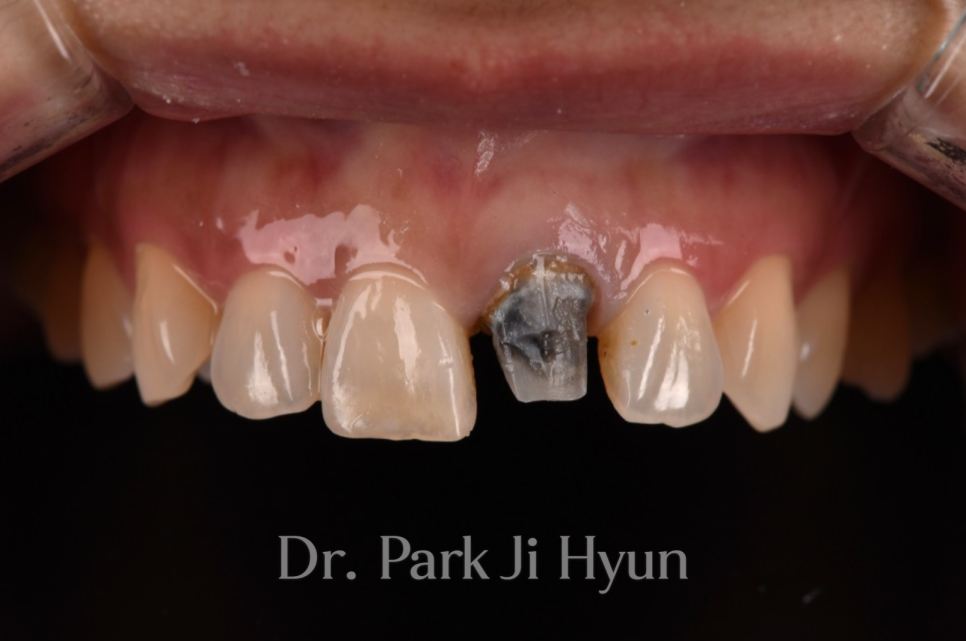
Upon removing the existing crown, as expected, the inner tooth was discolored black. Teeth that have undergone root canal treatment often darken over time.
Therefore, I approach crown retreatment by dividing it into three layers: ✓ 1st layer, Gums — the framework surrounding the tooth, ✓ 2nd layer, Foundation — the color of the crown abutment, ✓ 3rd layer, Form — the shape and color of the crown. If the lower layers remain unaddressed, no matter how much effort is put into the upper layers,
the results will be limited. 2nd layer: First, brighten the dark tooth at Edae Station Dental Clinic.
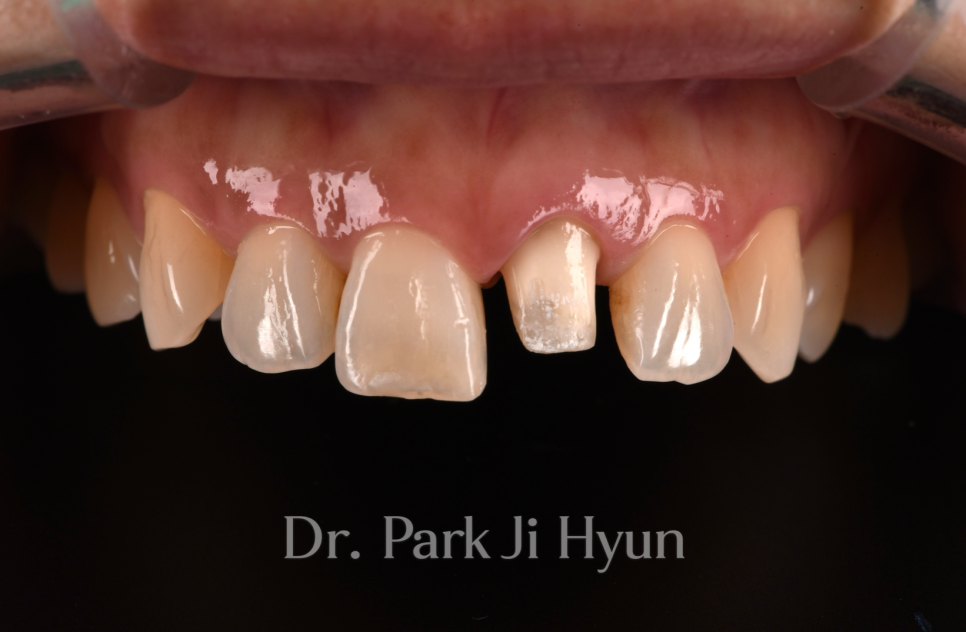
You might wonder if bleaching is necessary if the tooth will be covered by a crown anyway. However, natural-looking front tooth crowns are often made from materials that allow some light to pass through.
If the foundation is dark, that dark color will show through, or the crown will have to be made opaque to hide it. Therefore, in this case, non-vital tooth bleaching (a method of brightening the color from inside a root-canal-treated tooth with medication) was performed first.
As shown in the photo, the base color returned to an ivory tone, creating room to make the crown more transparent and natural. I also believe it's significant that the color issue was resolved without further tooth reduction.
1st layer: Bringing the raised gum line back down at Edae Station Dental Clinic. Next is the gum. The gum line, which had receded (gingival recession) and was higher than the opposite side, needed to be adjusted.
This time, we applied a method called BOPT. This is a non-surgical method of gum contouring, which I have mentioned before. It involves trimming and reducing the connection between the original crown and root of the tooth, and the gums then fill in the reduced thickness,
creating thicker and more stable gums. To put it more simply, it creates space for the gums to settle around the neck of the tooth.
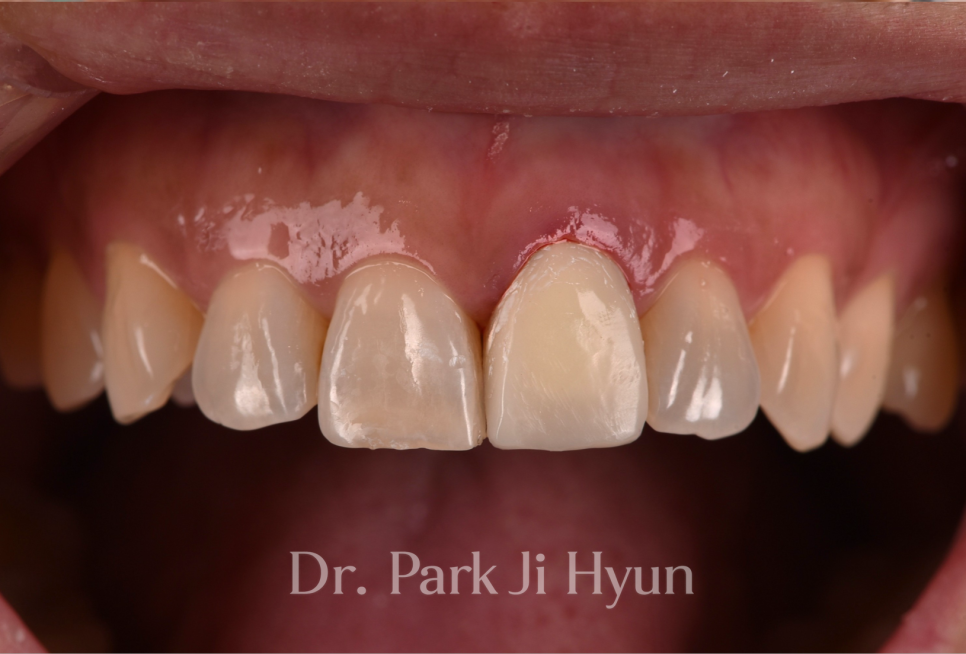
(After applying the BOPT method, the gum line is first adjusted with a temporary crown.) By carefully controlling the shape of the prosthesis, it also has the advantage of being able to bring down the receded gum to some extent.
However, this method requires delicate tooth shape modification and precise adjustment of the prosthesis, so skilled technique is absolutely essential.
Hello. I am Jihyun Park, a prosthodontist and chief director of Seoul Yido Dental Clinic. Front teeth are located at the front of the face, so if you fall... blog.naver.com 3rd layer: Adjusting the crown shape within the face at Edae Station Dental Clinic.
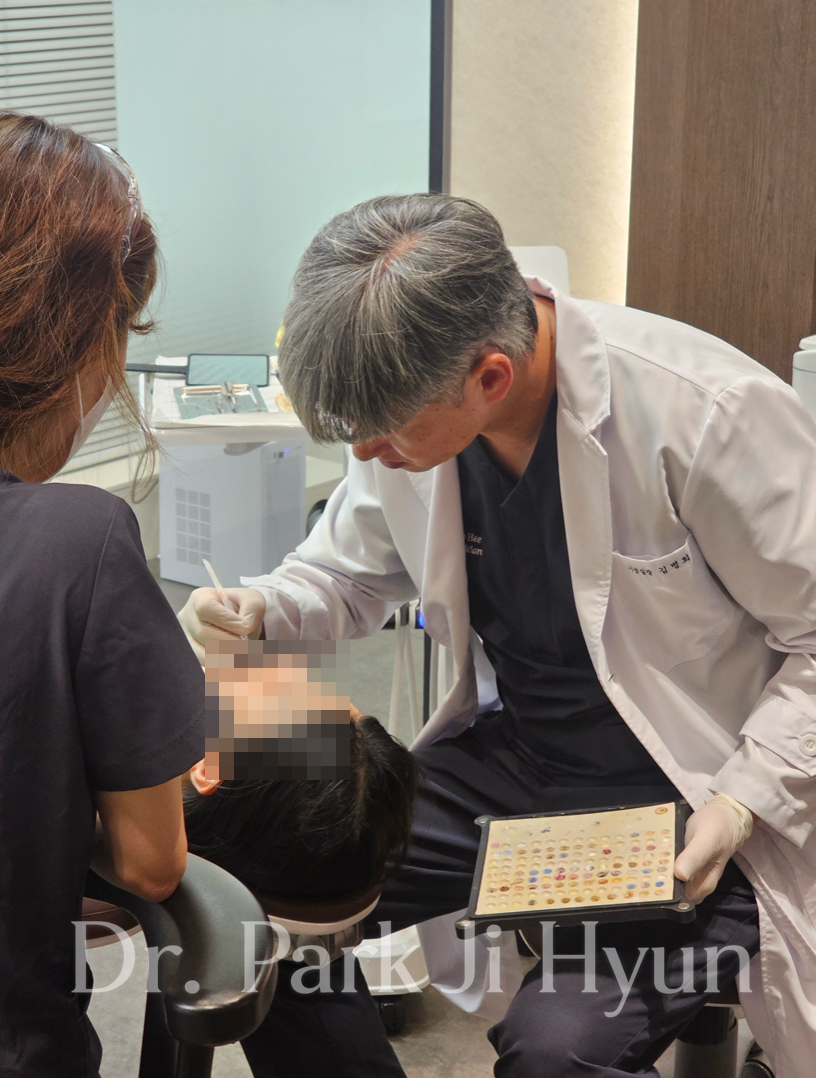
Once the gums and foundation are prepared, it's time for crown fabrication. This patient's existing tooth alignment was misaligned with the facial midline and the interpupillary line (the line connecting both pupils).
These reference lines are not visible on a model and can only be confirmed in front of the patient's face.
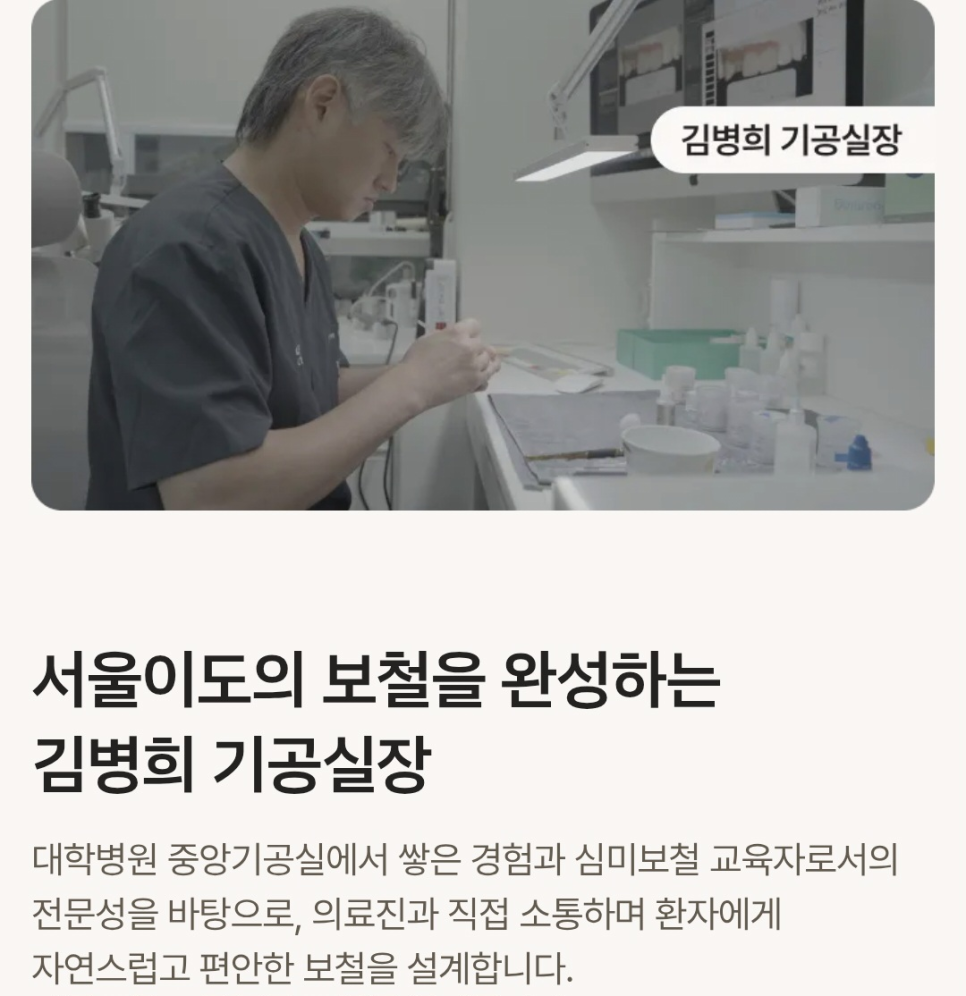
Therefore, on the day of setting, the chief dental technician and I adjusted the color and shape together in the treatment room while looking at the patient's face. (Chief dental technician Kim Byung-hee, who leads our Seoul Yido Dental Clinic's dental laboratory, has extensive experience in chairside adjustments with patients like this.)
Front Tooth Crown Retreatment: The Results at Edae Station Dental Clinic
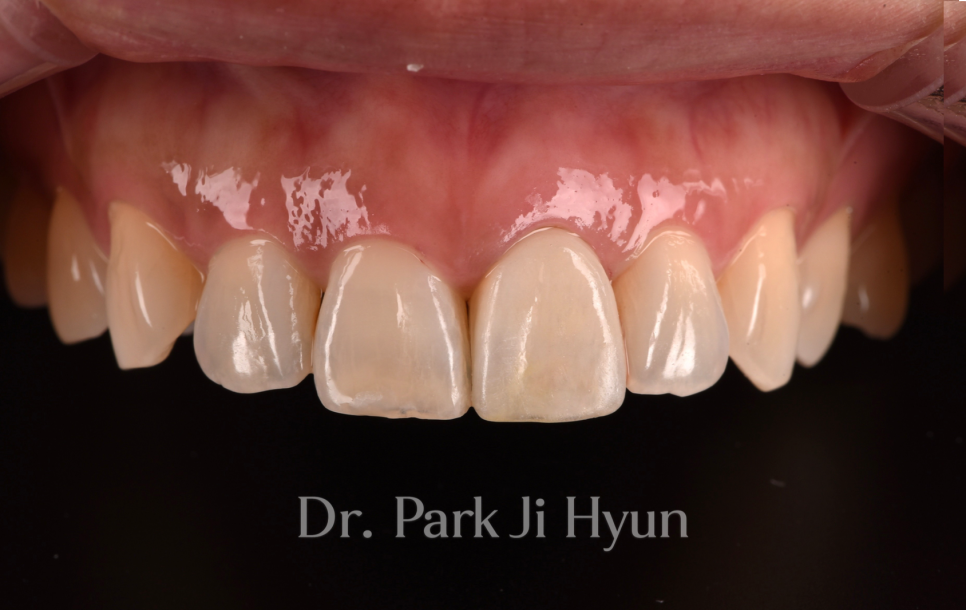
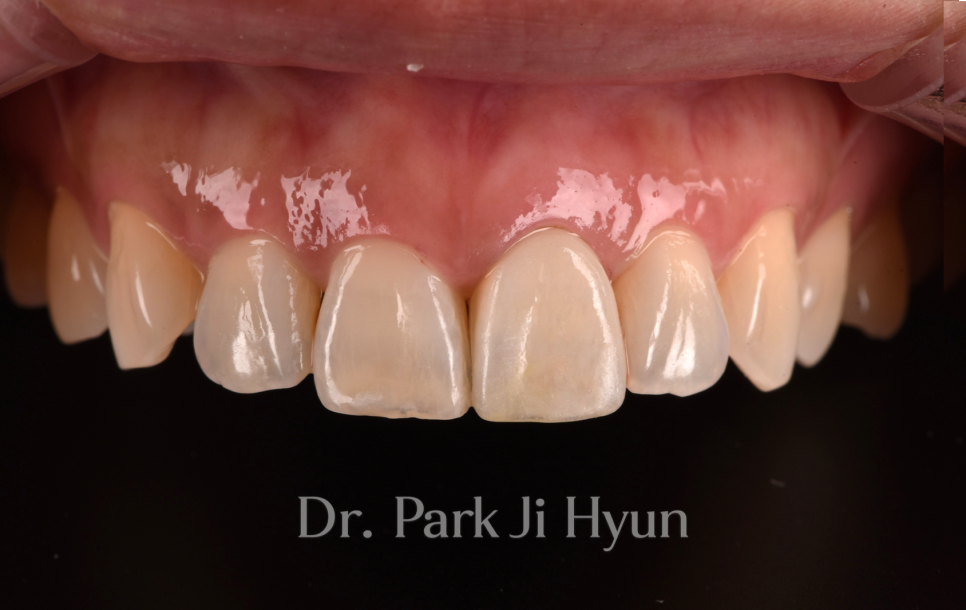
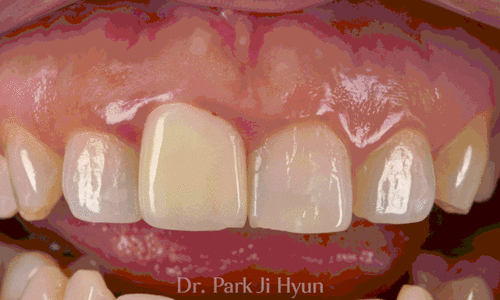
This is a photo after the final crown was placed. The gum line height of both front teeth was matched, and the crown color blended in naturally with the adjacent teeth. To be honest, retreating one crown involved a fairly long process, including bleaching, temporary crowns, and same-day adjustments.
Nevertheless, the reason for adhering to this sequence is that treatments that skip even one step often lead to the same problems and concerns in the end.
Retreatment Concerns at Seoul Yido Dental Clinic at Edae Station Dental Clinic. Recently, many patients have been visiting Seoul Yido Dental Clinic for front tooth crown retreatment. Most of them are not new concerns, but rather long-standing frustrations they've felt every time they look in the mirror.
Therefore, when I complete such cases and see patients smiling comfortably, I feel the greatest reward as a dentist. I sincerely thank you for trusting me and seeking me out after much deliberation.
Seoul Yido Dental Clinic will continue to provide treatment that is precise, meticulous, and understandable to everyone, even if it takes time. This was Jihyun Park, a specialist in dental prosthodontics.
Thank you.

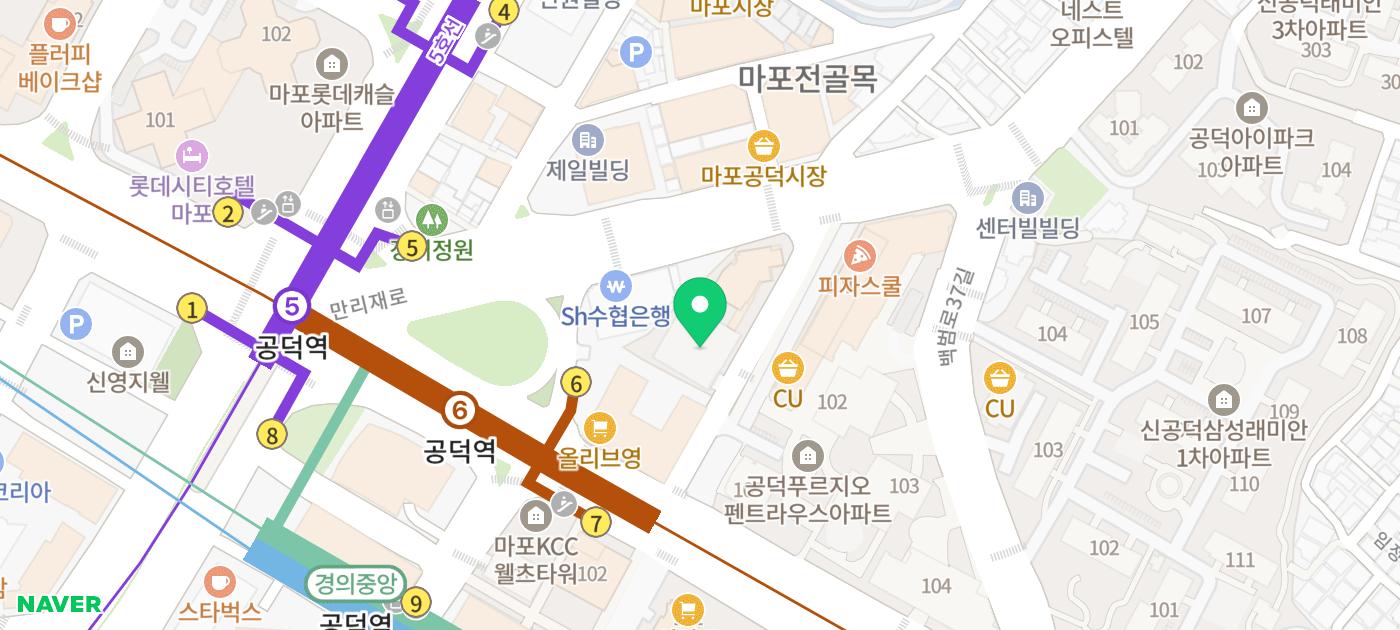
2nd Floor, 24 Manlijae-ro, Mapo-gu, Seoul ※ After treatment, temporary sensitivity, gum swelling, or bleeding may occur, and after non-vital tooth bleaching, the color may darken again over time, or the gum position may settle differently depending on the individual.
Please check before treatment
※ The photos posted are actual treatment cases published with the patient's consent. Treatment results may vary depending on individual tooth and gum conditions. Sensitivity, pain, gum irritation, fracture or detachment of prosthetics, etc., may occur during crown removal, non-vital tooth bleaching, and gum treatment, and additional treatment may be required.
View Clinical Cases
Enter simple information to view cases
Search anything
Ex: Implants, swollen gums, teeth whitening