Treatment Details
Hello, I'm Dr. Sungmin Ko, the chief director of Seoul Yido Dental Clinic.
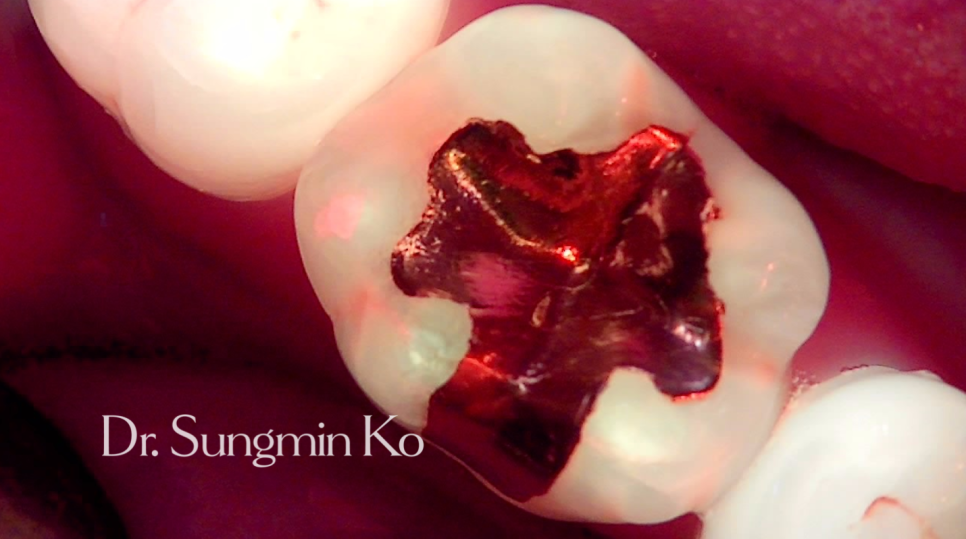
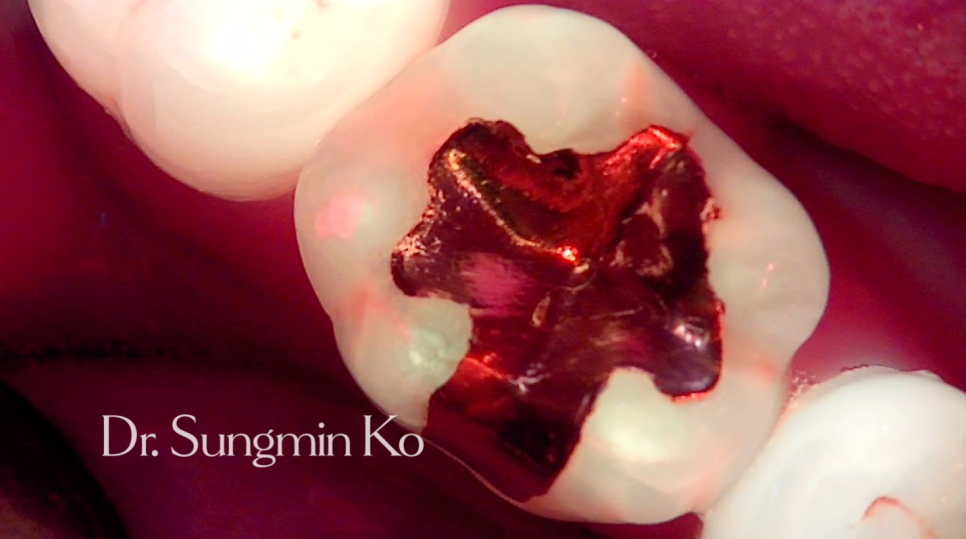
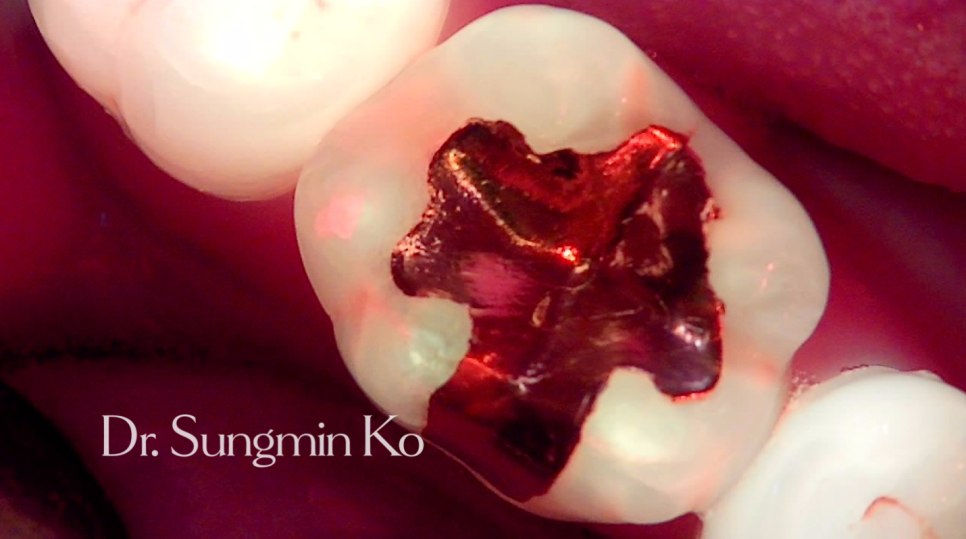
What is this photo? It's an old gold inlay illuminated by a device called “Q-ray.” Q-ray is a device that shines a specific light to reveal cavities that are not easily visible to the naked eye, showing them in red.
When illuminated like this, a red light appeared along the edge of the inlay. Old inlays can sometimes develop small gaps between the inlay and the tooth, allowing bacteria to seep in and cause cavities from within.
After removing it, we found that the cavity had extended deep, close to the nerve. At such a moment, the first question we ask is, can we save this nerve?
So today, I want to talk about a treatment that preserves the tooth more than root canal treatment! If a cavity is deep, is root canal treatment always necessary? Gongdeok Station Dental Clinic: They say I need root canal treatment because my cavity is deep.
Hearing such words at the dentist can be disheartening. Root canal treatment often brings to mind pain during the procedure, and it's a long process that doesn't end in one visit, requiring a crown afterward.
However, there's one point worth considering beforehand. The nerve inside the tooth is a living tissue with blood vessels running through it. This tissue supplies moisture and nutrients to the inside of the tooth.
Therefore, a tooth that has undergone root canal treatment becomes hollow and dry, tending to fracture more easily over time. The crown placed after treatment is to protect this weakened tooth.
So, let's rephrase the question.
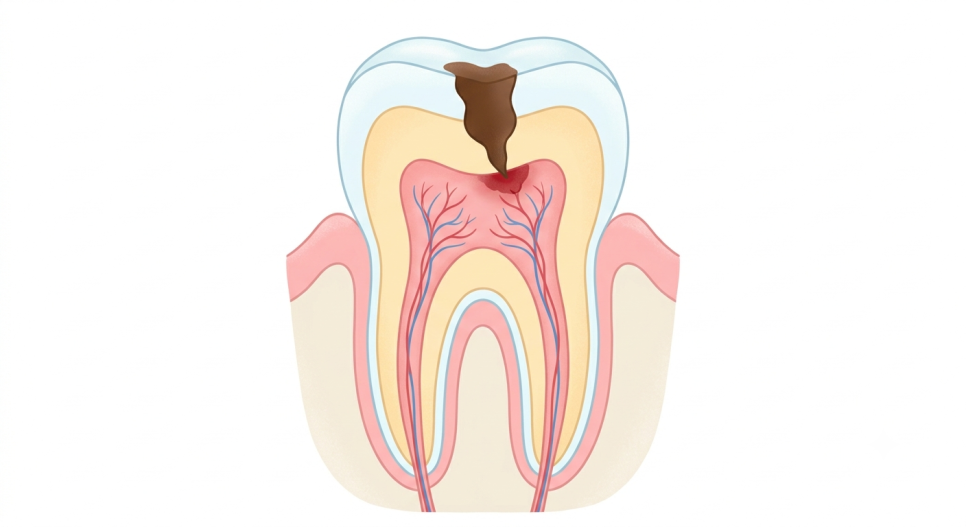
Is the nerve 'entirely' damaged, or is only 'a part' of it, in contact with the cavity, damaged? If only a part is damaged, we can remove that portion and leave the healthy nerve intact.
This is called vital pulp therapy, or VPT. You can think of it as similar to cutting out a bruised part of an apple and eating the rest.
The area where the damaged nerve is cleaned out is covered with a bioceramic material like MTA. This material is biocompatible and has a mechanism that helps the nerve beneath it to regenerate a thin, hard wall on its own.
So, can any tooth be saved? Gongdeok Station Dental Clinic: Unfortunately, no. We assess the health of the nerve directly during treatment, examining the nerve surface with magnification and checking if the bleeding from the exposed nerve stops within a few minutes.
It's crucial to confirm this accurately. If the bleeding stops quickly, it's a sign that the nerve still has the strength to recover. In the past, vital pulp therapy for adult teeth was often considered to have uncertain outcomes, but with advancements in materials and equipment, good results are consistently being reported recently.
consistently being reported recently.

Here are the photos of this patient.
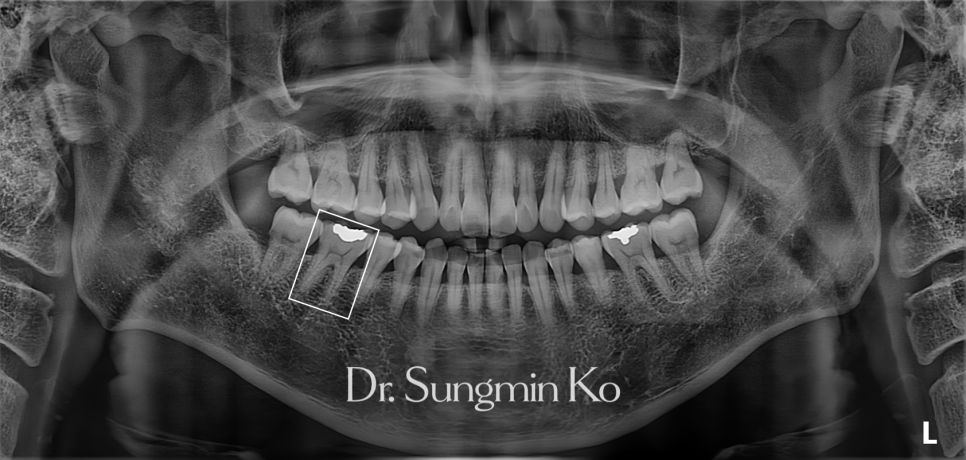
Gongdeok Station Dental Clinic: The initial panoramic X-ray showed gold inlays on both lower molars.
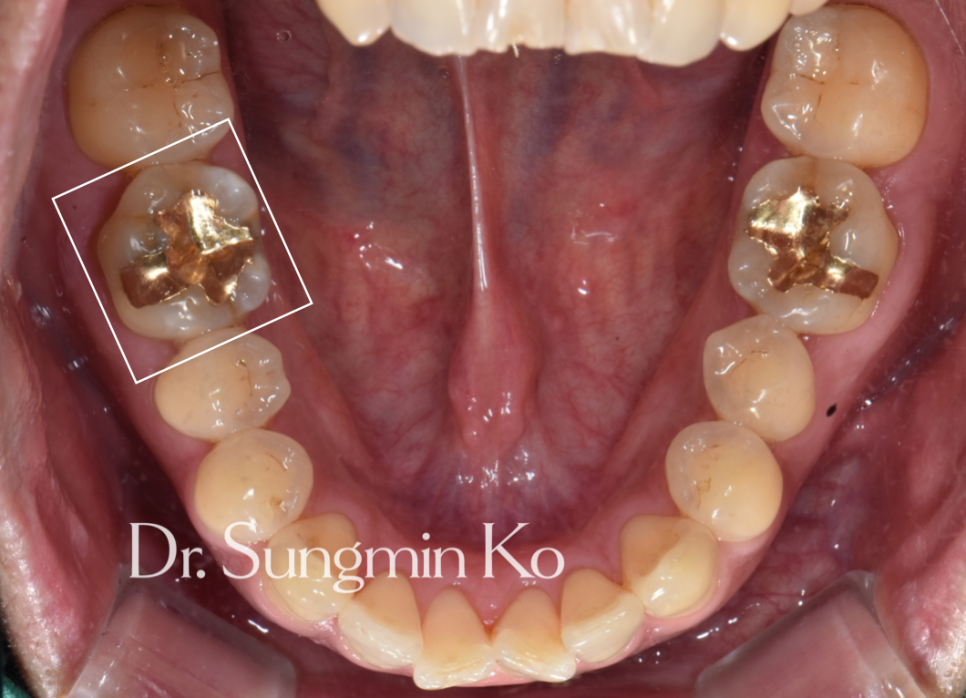
Gold inlays on lower molars: Gold is a hard and durable material, but with prolonged use, bacteria can seep through the gaps at the edges where it meets the tooth, causing cavities to form underneath.
This is a part that requires more caution as it's not easily visible from the outside. So, we decided to remove the inlay and check the inside.
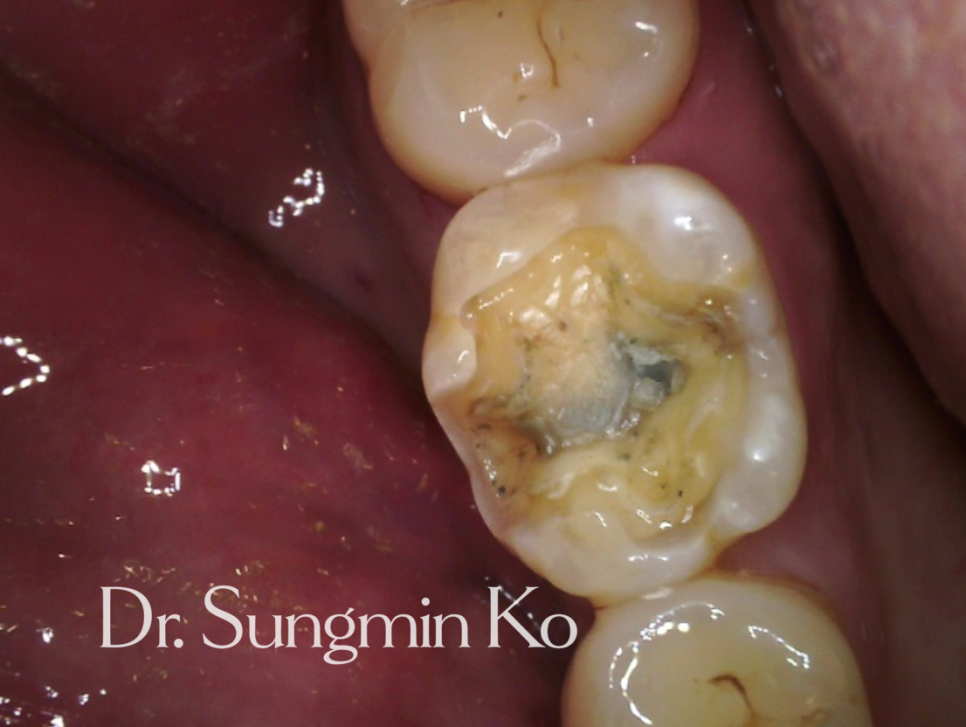
After removing the inlay and the cavity, we found that the brown-colored cavity was deeper than expected. It was deep enough that the nerve could be exposed while removing the cavity.
Fortunately, after checking the condition, it was still in a state where it could be saved. So, only the damaged part in contact with the cavity was treated, and that area was meticulously covered with material.
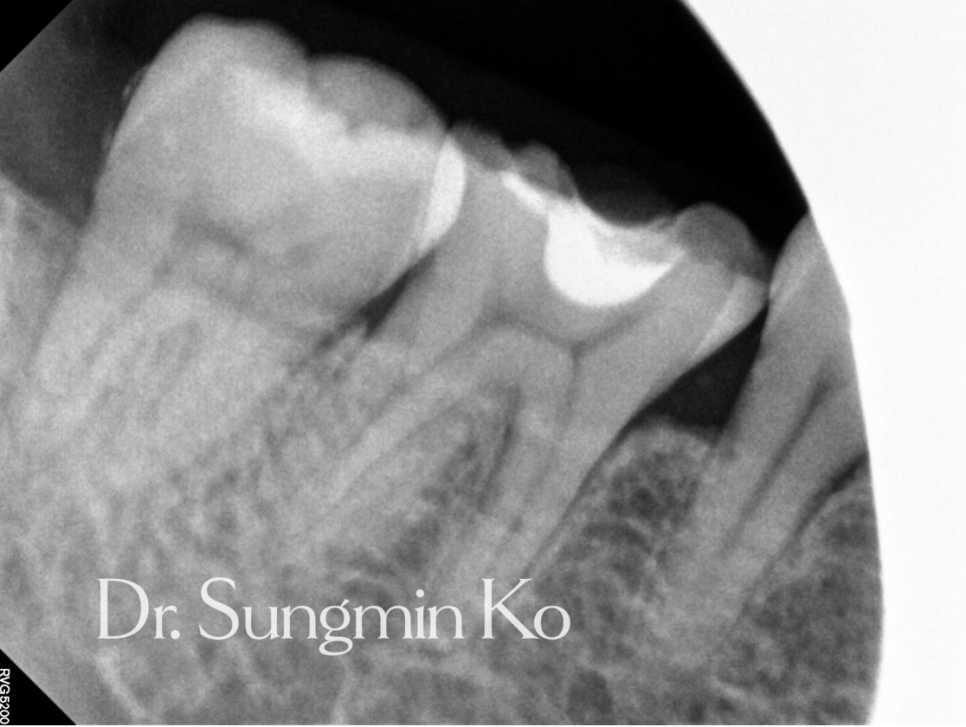
Gongdeok Station Dental Clinic: Post-vital pulp therapy X-ray. The white area at the top is the material covering the nerve. Currently, the patient has a temporary crown, and we are regularly monitoring the progress.
They also mentioned that the occasional pain they felt before treatment has now disappeared. The progress is good, and we plan to complete the treatment with a permanent crown later. When hearing this, some patients worry, "Won't I have to get treatment again if it hurts later?"
That's right. There is certainly a possibility of that. However, even then, it's not too late to get root canal treatment. Conversely, once root canal treatment is done, it cannot be reversed.
If the prognosis is good, it will be a great opportunity to use your own tooth again!

Vital Pulp Therapy: The deeper a cavity gets, the fewer treatment options are available. Conversely, the earlier it's discovered, the greater the possibility of saving the nerve at Gongdeok Station Dental Clinic.
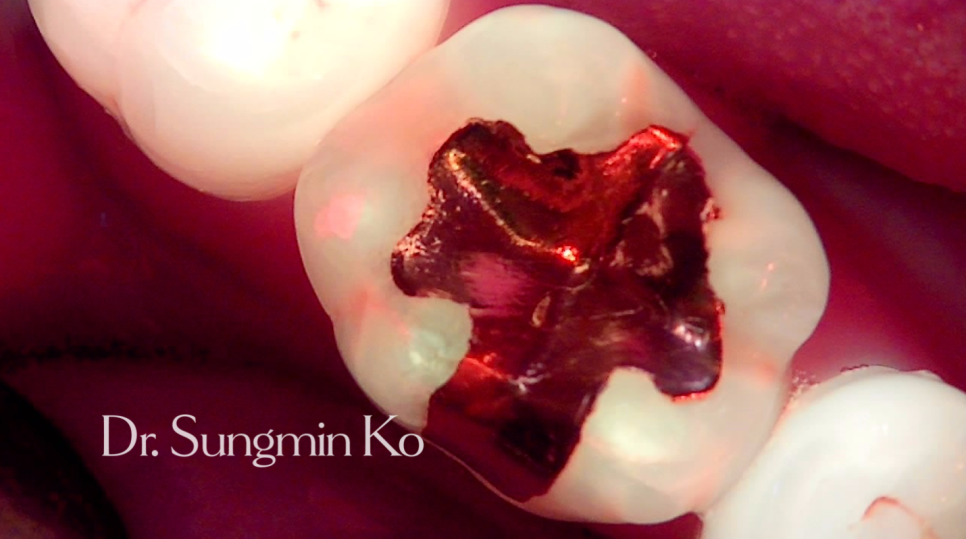
Remember the photo I showed you at the beginning? Just as a tooth might look fine but its true condition couldn't be known until an examination, if you have old dental restorations, I recommend getting a thorough check-up!

I'll say goodbye here today~ Thank you always for your great interest!! This was Chief Director Sungmin Ko.

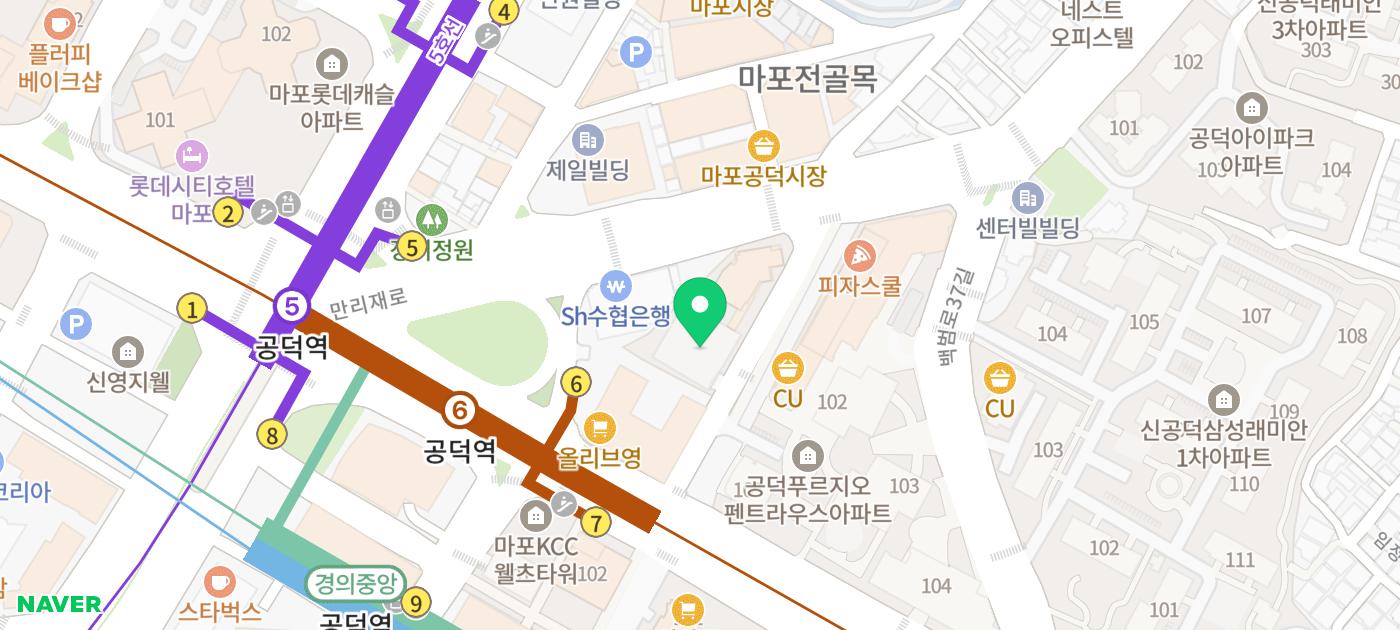
2nd Floor, 24 Mallijae-ro, Mapo-gu, Seoul ※ Temporary sensitivity or pain may occur after vital pulp therapy, and regular follow-up is necessary as root canal treatment may be required in some cases.