Why does a root-canal-treated molar swell again?
There can be various reasons, such as insufficient previous root canal treatment or a crack in the tooth, requiring X-ray and CT examinations.

This case involved confirming inflammation around the root and extensive bone loss in a lower molar that had undergone root canal treatment and a gold crown. After preparing the extraction site, bone grafting and implant placement were performed simultaneously.
Dentist in Charge Sungmin Ko Chief Director
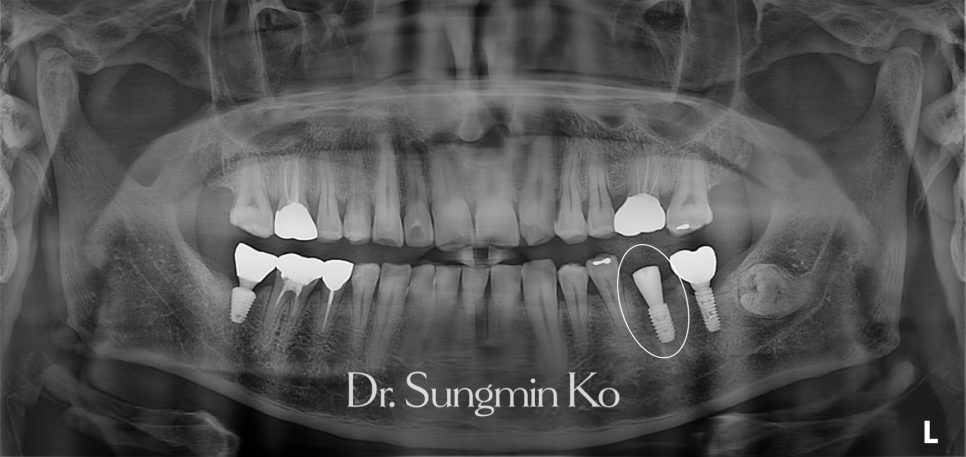
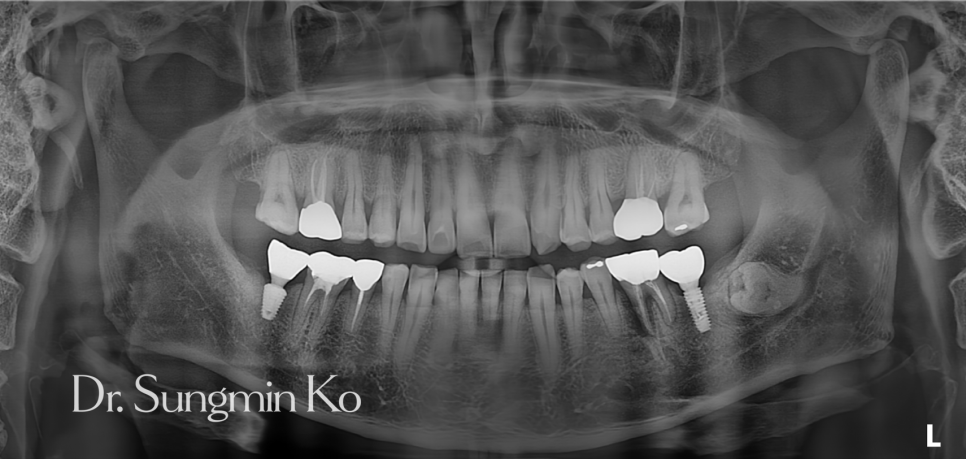
The gum of the lower molar, which had undergone root canal treatment and was crowned with gold, repeatedly swelled and caused discomfort. CT scans revealed extensive bone loss around the anterior root and the furcation area.
The tooth, deemed difficult to recover with retreatment alone, was extracted, and inflammatory tissue was removed. Bone grafting and implant placement were then performed simultaneously.
After thoroughly removing the inflamed area and placing the implant, an alignment guide was used to ensure the angle was parallel to the adjacent implant, and bone grafting was completed.
This is the stage immediately after bone grafting and implant placement. We are currently observing the progress, waiting for the implant to firmly integrate with the bone.
Treatment Details
Hello everyone, this is Dr. Sungmin Ko, chief director of Seoul Yido Dental Clinic. It's gotten quite chilly after the rain last week. Is everyone taking care to avoid colds?

During seasonal changes like this, I often hear a particular complaint: 'My gums are swollen again, I've been a bit tired lately.' When seasons change, or when people are stressed or fatigued, their gums often send out signals first.
However, if the repeatedly swollen area is a molar that previously underwent root canal treatment, it requires closer examination. Why does a molar with a gold crown after root canal treatment cause problems again? Mapo Implant

A molar that looks fine on the outside but feels subtly uncomfortable when chewing, or whose gums swell and subside. What could be the reason? Let's look at an actual case.
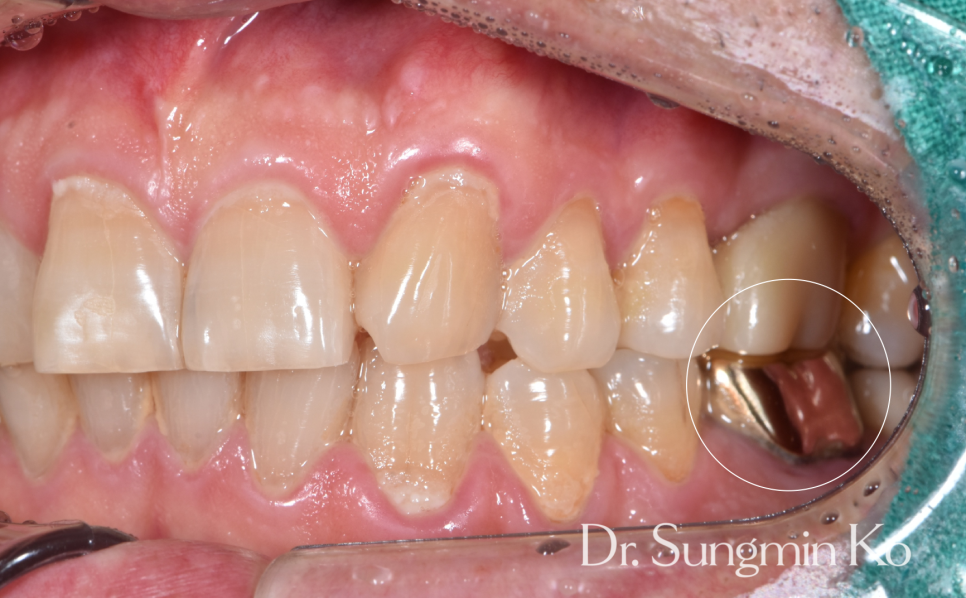
This patient also came in complaining of gum discomfort in a lower molar that had undergone root canal treatment and was crowned with gold.
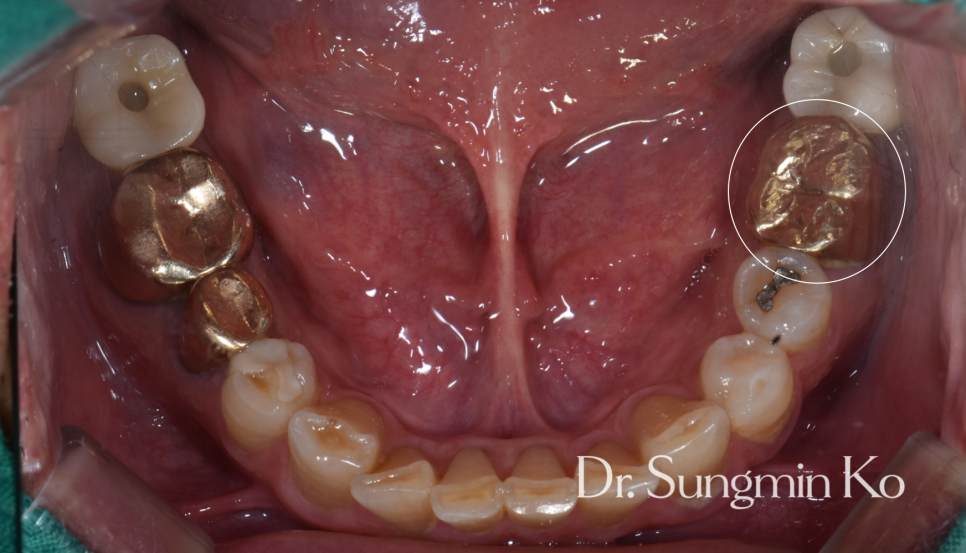
Lower molars typically have two roots. The anterior and posterior roots are embedded side by side. (It's easy to imagine it as a chair standing on two legs, haha.)
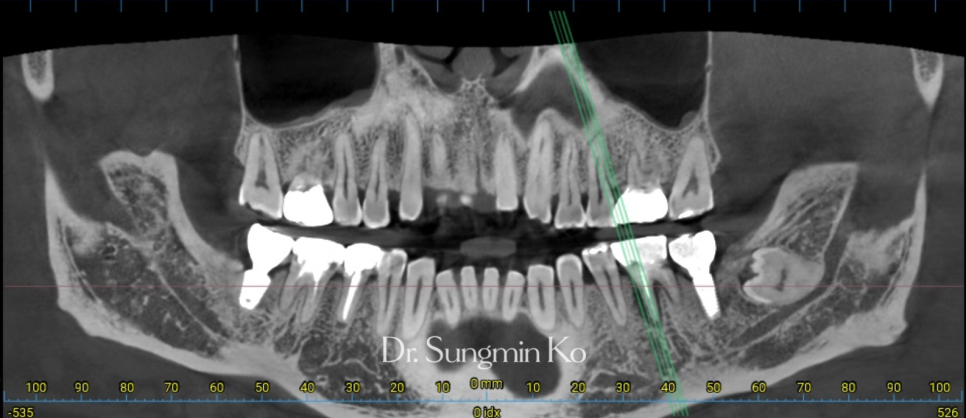
However, in this tooth, a large inflammation has developed around the anterior root.
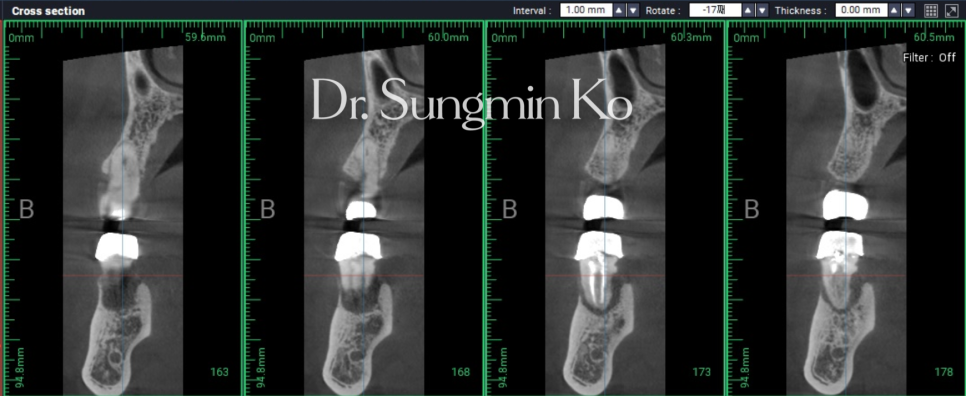
A CT cross-section shows that the bone around the anterior root has dissolved quite extensively. It's like one of the chair's legs is wobbly. Reasons for inflammation recurring in a tooth that has already undergone root canal treatment include insufficient initial root canal treatment,
or a crack (fracture) in the tooth, among others. In such cases, retreatment is an option.
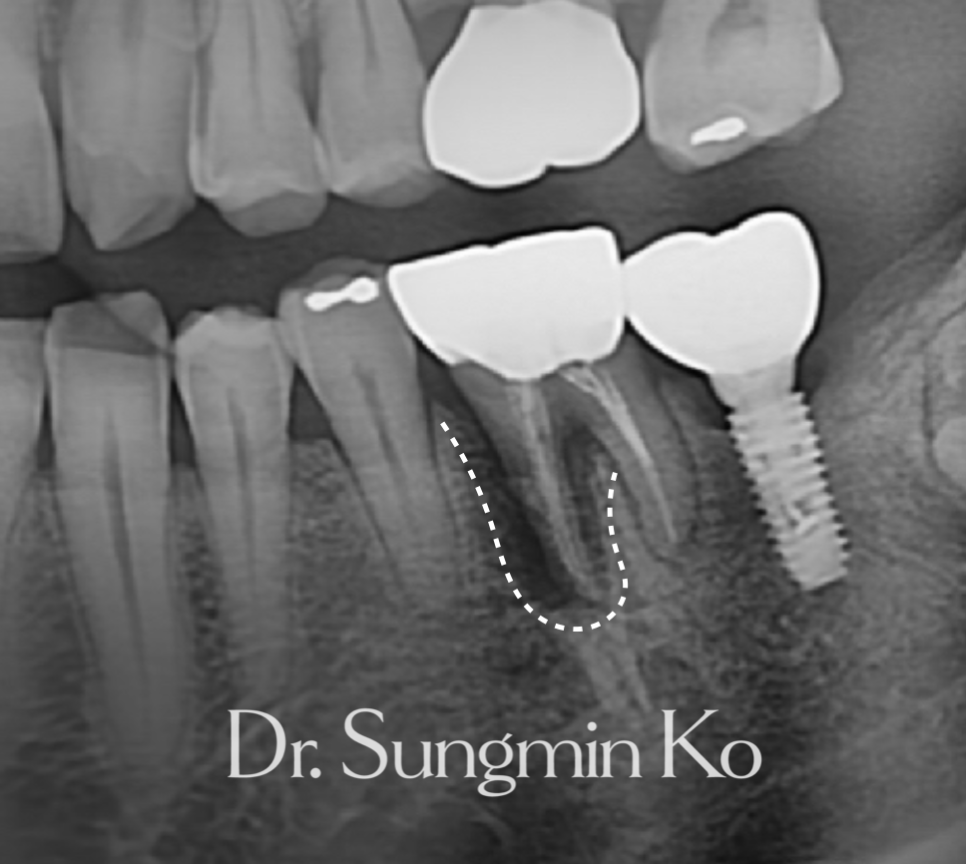
However, in this case, the inflammation was not limited to one root but had spread extensively to the bone around the furcation area. Therefore, even if retreatment were performed to remove the inflammation, it was determined that the widely dissolved bone area would be difficult to recover.
Thus, we ultimately opted for an implant accompanied by bone grafting. 'But if it's going to be extracted anyway, can't I just get an implant later?' Mapo Implant: If inflammation is left for too long, the surrounding bone continues to dissolve.
Then, when you try to get an implant later, extensive bone grafting may be required, and the treatment period could lengthen. Therefore, if it's deemed difficult to save, deciding before more bone dissolves can be considered part of the treatment!
The inflamed area was thoroughly cleaned, and an implant was placed. The molar immediately behind it also had an implant placed previously, so two implants would stand side by side. If adjacent implants are misaligned, the final crown will also be crooked, and the biting force will not be evenly distributed.
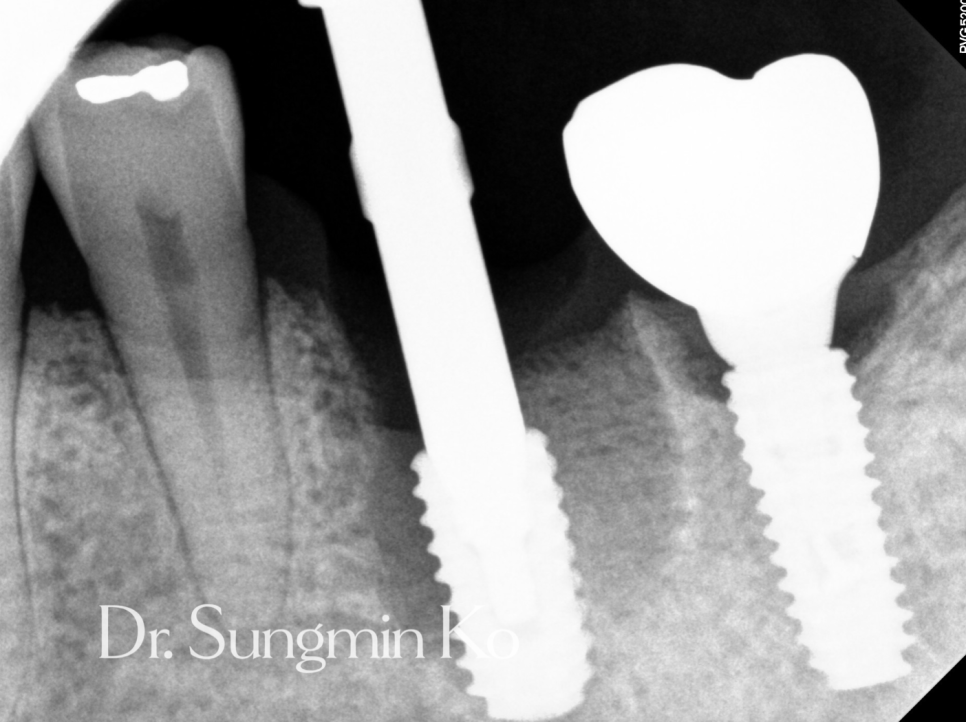
Therefore, during placement, an angle verification tool is attached, and a photo is taken to confirm that it is parallel to the posterior implant. With this, bone grafting and simultaneous placement are completed!
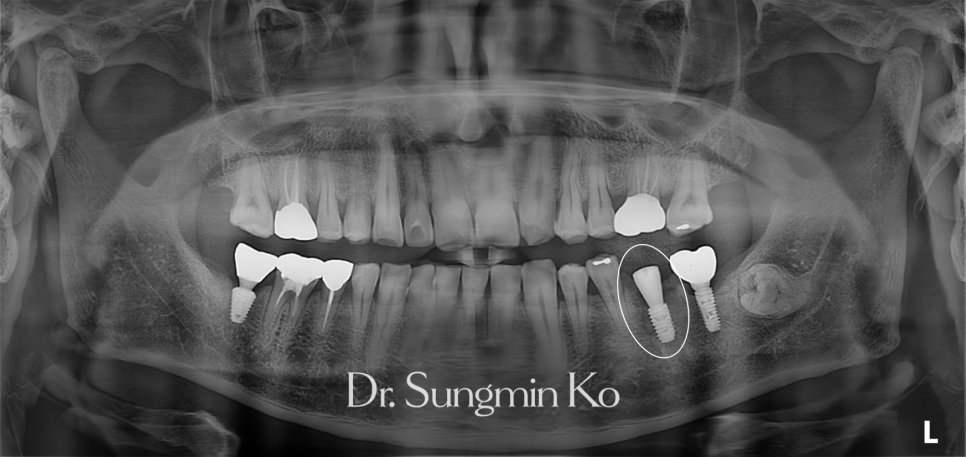
Mapo Implant: Immediately after molar implant placement, we are now waiting for the implant to firmly integrate with the bone!

In the previous post, I mentioned, 'No matter how advanced implants become, they cannot perfectly replace your natural teeth!' I still hold that belief. However, holding onto an unsalvageable tooth and losing the bone in that area is a loss.
I believe it is my role to honestly advise on how long a tooth can be saved and when an implant is necessary. (Of course, even for the same molar, if there is sufficient bone and the inflammation is localized, retreatment can often allow for long-term use.)
Molar Implant: The Timing to Preserve Jawbone, Mapo Implant. "My gum around the root-canal-treated molar keeps swelling." "My crowned tooth feels uncomfortable when chewing." "I don't know if it needs to be extracted or can be saved." If you have these concerns, don't delay too long.
Please make sure to check the condition of your teeth and bone. We will accurately diagnose whether to save the tooth or proceed with an implant!

Thank you for reading until the end today! This was Dr. Sungmin Ko, chief director of Seoul Yido Dental Clinic.
Please check before treatment
Temporary swelling, pain, bleeding, infection, or sensory disturbances may occur after implant surgery, and there is a possibility of bone graft material exposure or absorption. Treatment results and duration may vary depending on the extent of inflammation, remaining bone, overall health, and oral hygiene status, requiring regular follow-up observations.
No previous post.
View Clinical Cases
Enter simple information to view cases
Search anything
Ex: Implants, swollen gums, teeth whitening