Treatment Details
Hello. I am Jihyun Park, the chief director and prosthodontist at Seoul Yido Dental Clinic. Today, I'd like to talk about implants. Many patients who have had implants at Gongdeok Station Dental Clinic complain of persistent gum discomfort even after their teeth are restored.
I believe some of you reading this article may have come here because of that discomfort. The reasons for discomfort are often a combination of various factors.
1. Food impaction due to poor cleaning, or 2. Gum disease caused by remaining plaque and calculus, or 3. Poor implant position or prosthesis shape. However, sometimes there are patients who don't fit into any of these categories.
What could be the case then? What problem do you see in the photo? Gongdeok Station Dental Clinic
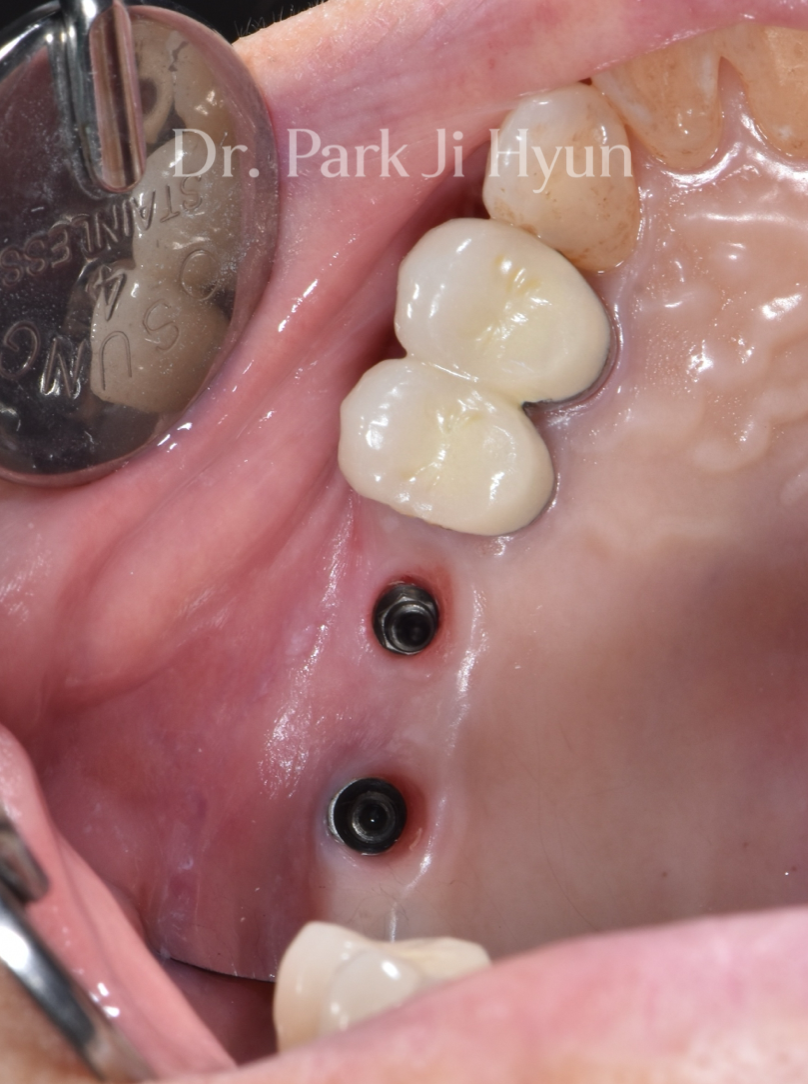
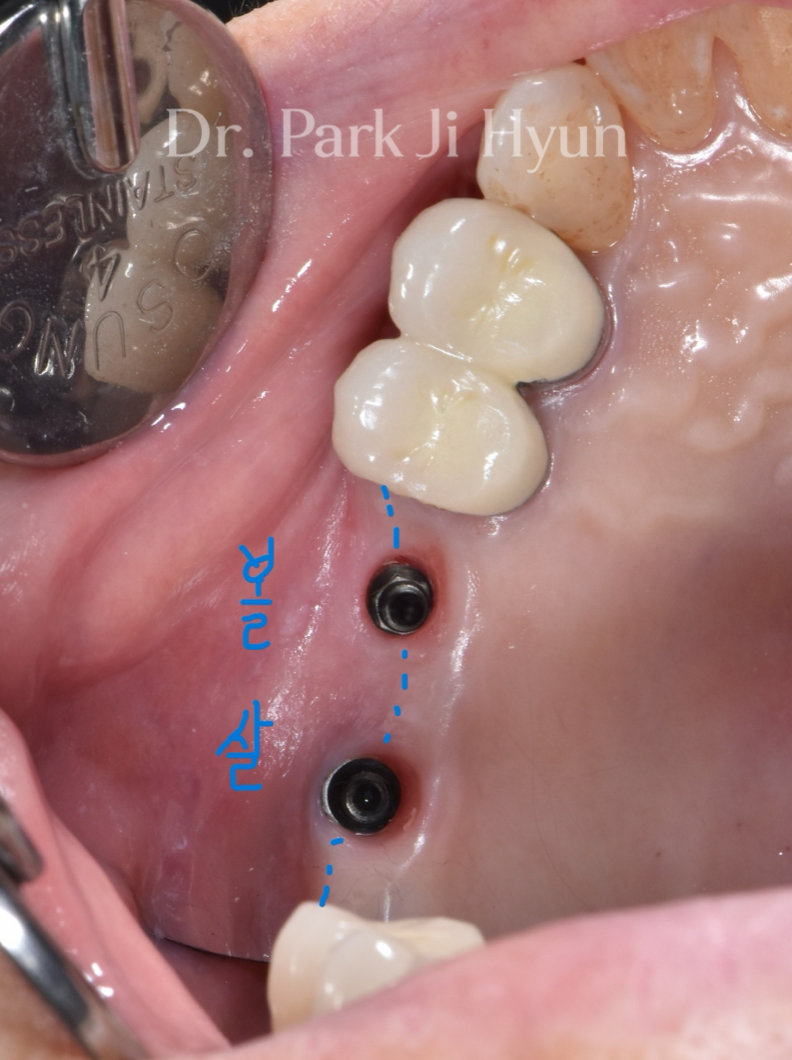
Prosthesis removed, two upper molar implants. This patient had implants several years ago and suffered from unexplained discomfort for all those years before coming to see me.
After removing the prosthesis, this is what it looked like. Can you immediately spot the problem?
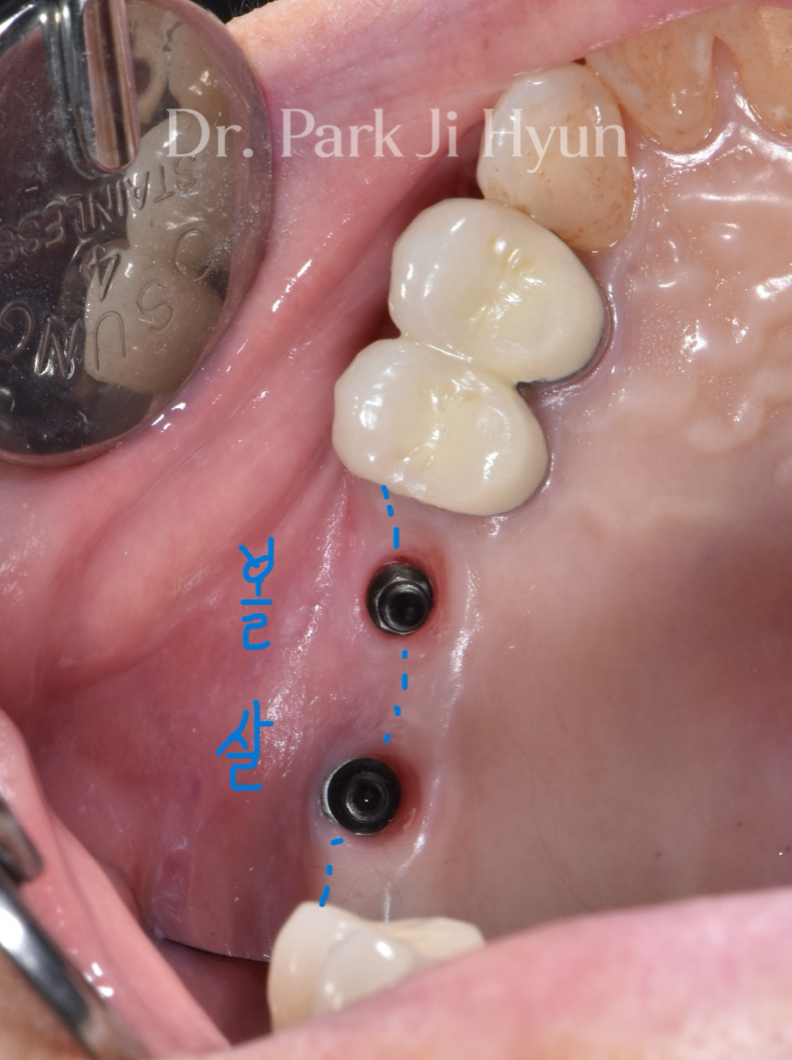
The answer is that the buccal mucosa is directly adjacent to the implant. Gum Barrier, Attached Gingiva. For an implant to last healthily for a long time, it must be surrounded by firm gum tissue. Gongdeok Station Dental Clinic
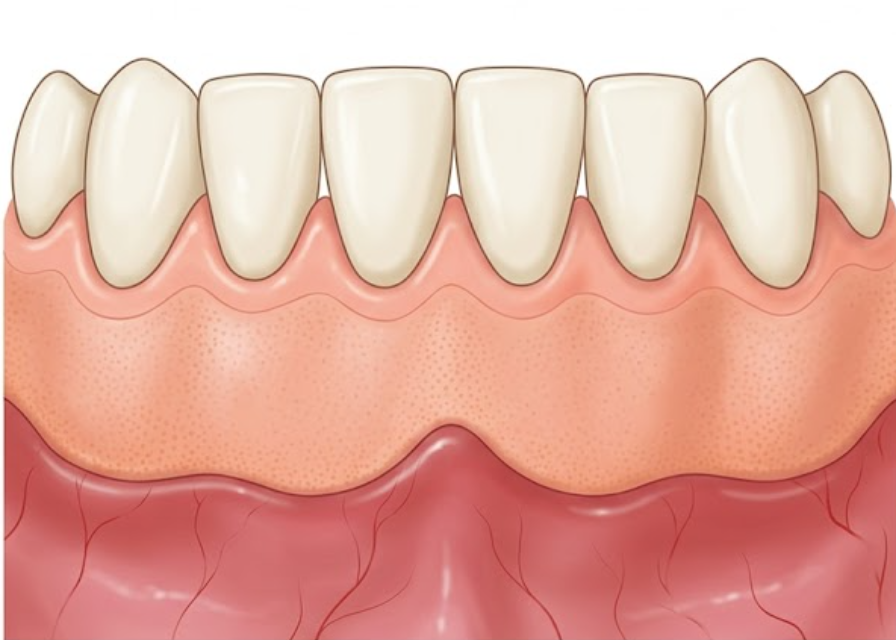
This firm, immobile gum tissue attached to the bone is called attached gingiva. It's like a fence for the implant. This gum acts as a protective barrier, preventing bacteria from penetrating around it.
But why does this important fence disappear? ✓ When implants are placed in remaining gum tissue after significant bone loss. ✓ When the cheek tissue is pulled towards the prosthesis after extensive bone grafting. The problem here is that the cheek tissue is not fixed,
but a mobile part. Whenever you move your cheeks while speaking or eating, a small gap opens between the prosthesis and the cheek tissue. Saliva, food particles, and bacteria within them continuously get pushed into this gap.
It's bound to be uncomfortable and painful. If this condition persists, the bone around the implant can resorb, leading to inflammation (peri-implantitis). Rebuilding with Free Gingival Grafting (FGG). Gongdeok Station Dental Clinic. In such cases, free gingival grafting (FGG) is considered.
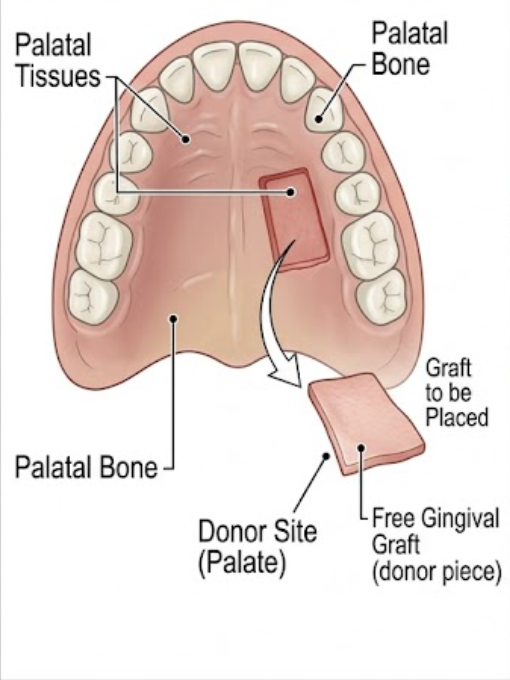
Simply put, it's a surgery where firm gum tissue is harvested from the palate and transplanted next to the implant.
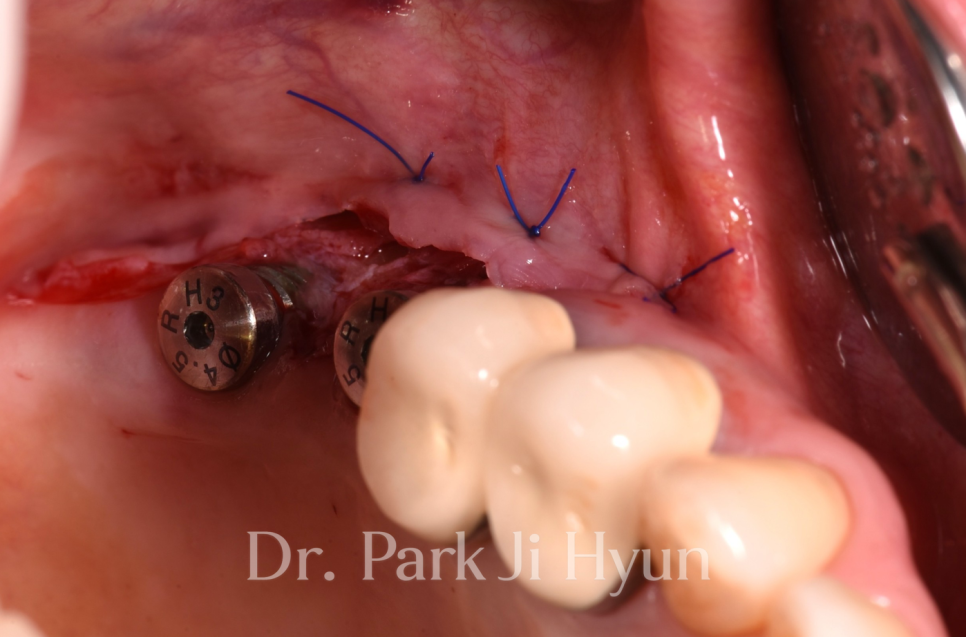
Buccal mucosa separated and repositioned downwards. First, the buccal mucosa directly attached to the implant is separated and tied down. This is the process of clearing the space where the fence will be built, isn't it?
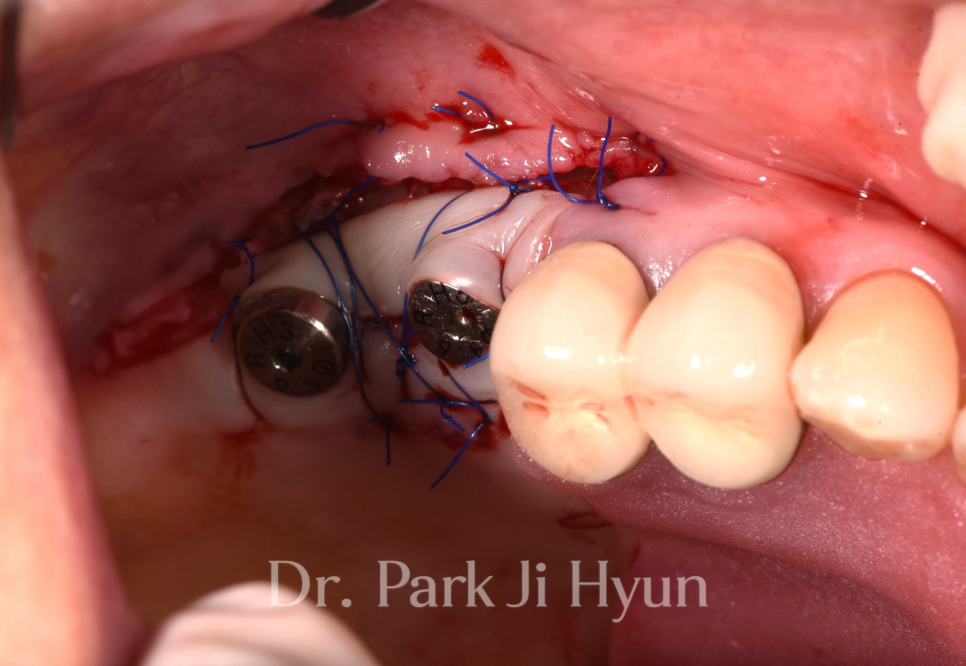
Graft placement and suturing using tissue harvested from the palate
Next, firm tissue harvested from the palate is transplanted to the recipient site. This is followed by suturing—one of the most critical steps in a free gingival graft procedure.
The grafted tissue must be meticulously sutured to ensure proper blood supply and prevent detachment or lifting, allowing it to integrate properly.
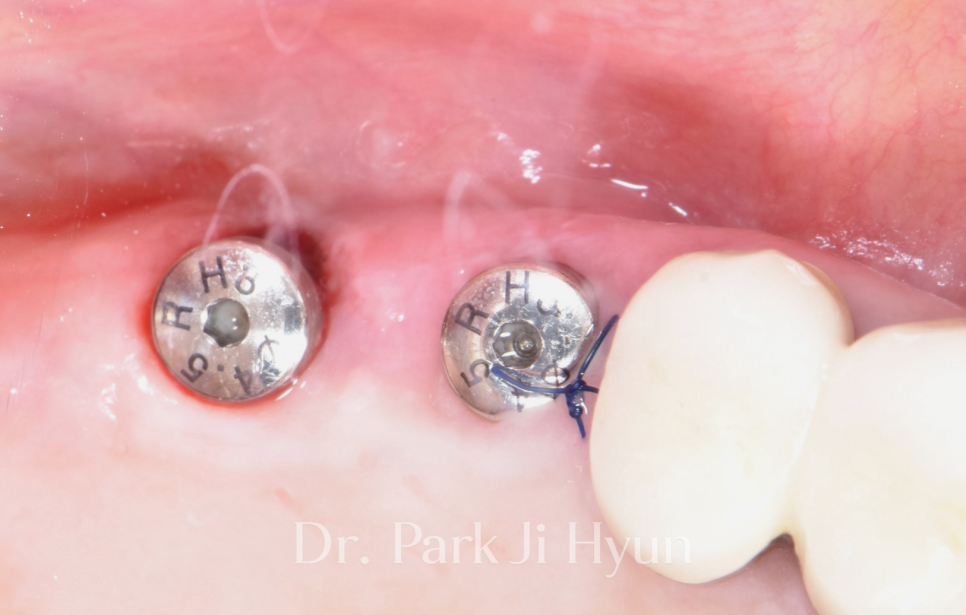
Healed graft site, with firm gum tissue formed around it. We wait until the grafted gum has sufficiently healed. Time is needed for the transplanted tissue to connect with blood vessels and firmly attach in its new location.
Results of Free Gingival Grafting? Gongdeok Station Dental Clinic
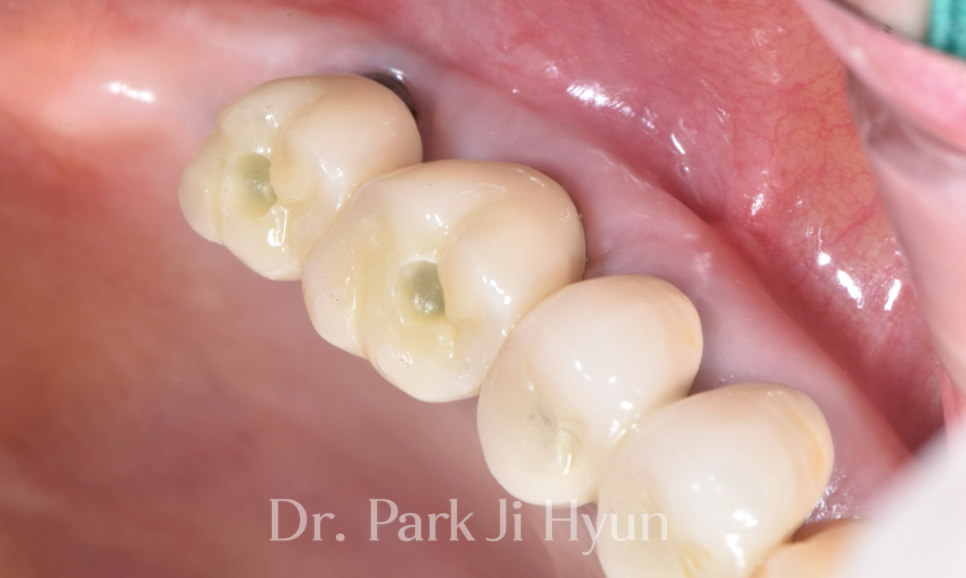
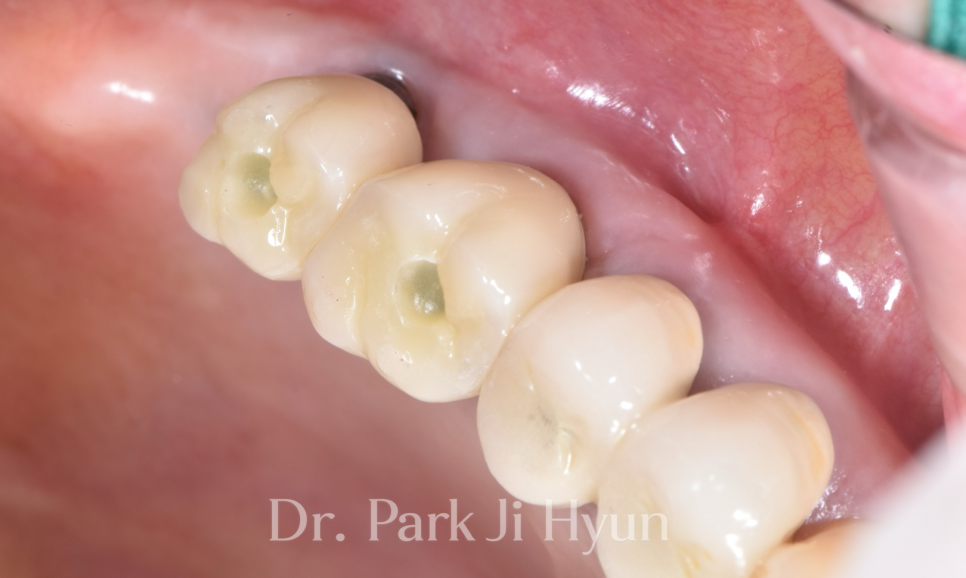
Prosthesis re-attached. This photo shows the completed result after a full recovery process, with the prosthesis re-attached. Firm gum tissue, which was not visible initially, now surrounds the implant.
This gum acts as a protective barrier, helping the implant last longer. I remember how happy the patient was when their discomfort disappeared after regaining a normal form. To be honest, FGG is a surgery that even dentists are hesitant to recommend.
It requires precise skill, but convincing a patient who has just finished implant surgery that another surgery is necessary is the most challenging part.
However, in some cases, this surgery is essential for using implants healthily for 20-30 years or more. Implants have now become a treatment available at many dental clinics.
But making those implants last well for 20-30 years or more requires delicate knowledge and intricate surgical techniques. No one wants their implant to fail within 5 or 10 years.
That's why Seoul Yido Dental Clinic performs free gingival grafting for those who need it, creating implants that can be used for a long time. We will always strive to be Seoul Yido Dental Clinic in Mapo-gu, treating every patient as if they were our own family, constantly learning and doing our best.
I will conclude my writing here today. Thank you.

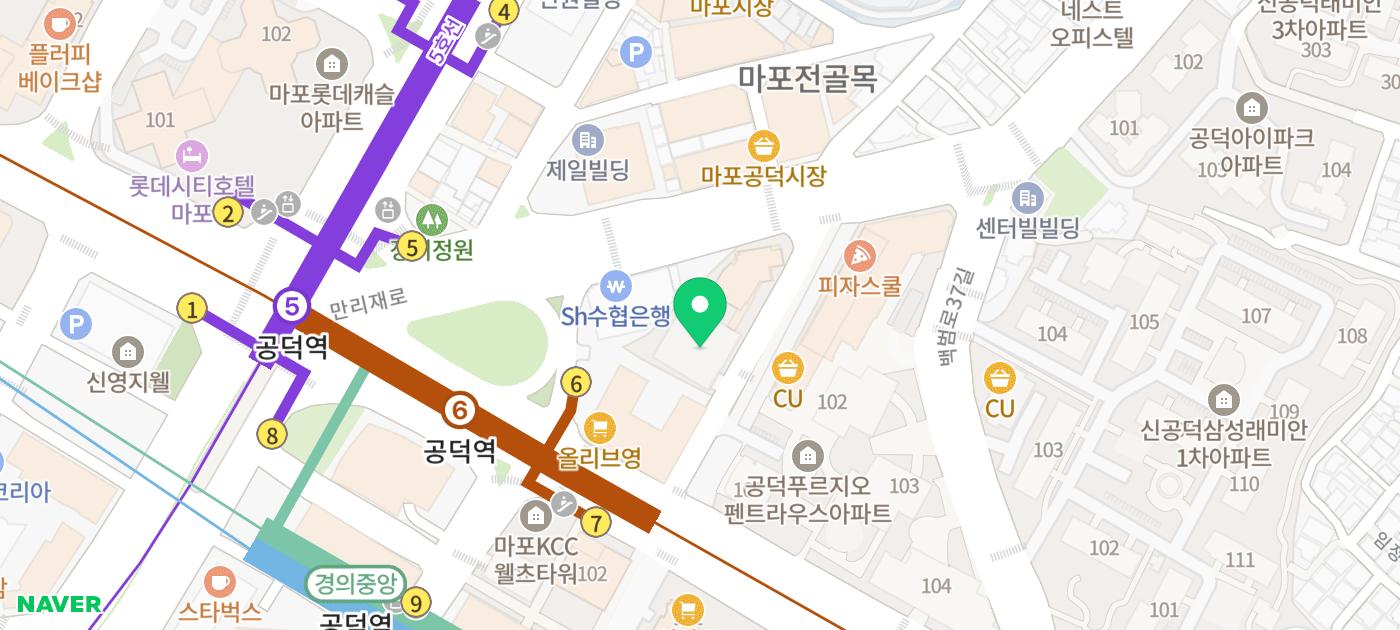
2nd Floor, 24 Mallijae-ro, Mapo-gu, Seoul