Treatment Details
Hello, I am the Chief Director of Seoul Yido Dental Clinic.
Chief Director and Prosthodontist at Seoul Yido Dental Clinic.
The anterior region seems to be a very honest area.
Even a slight deviation in gum height or prosthesis shape
can quickly look unnatural.
Poorly treated anterior teeth can make a smile look unnatural,
and in severe cases, can even make one reluctant to meet people.
Today's topic is about anterior implants.
The anterior region is truly a difficult area for re-treatment.
Once the bone and gums have settled, recreating that position
becomes several times more challenging than the initial surgery.
Therefore, it is crucial to achieve the best possible results
in the very first attempt.
Four stages: How to arrange them?
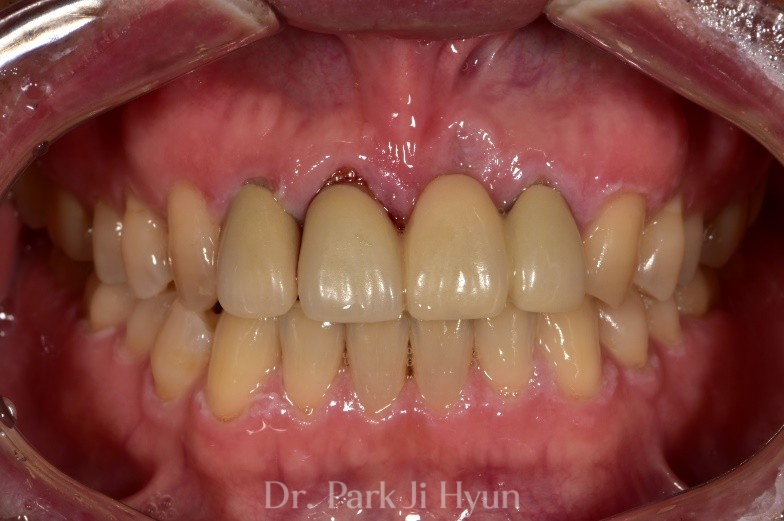
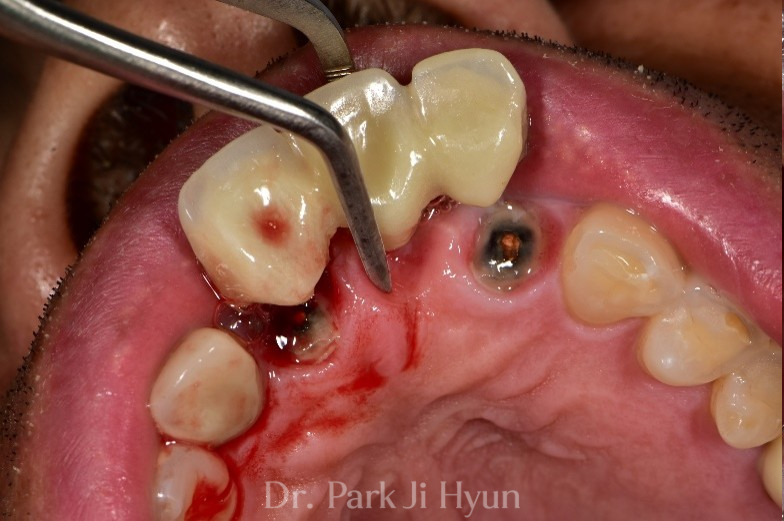
The patient visited due to a fractured anterior bridge.
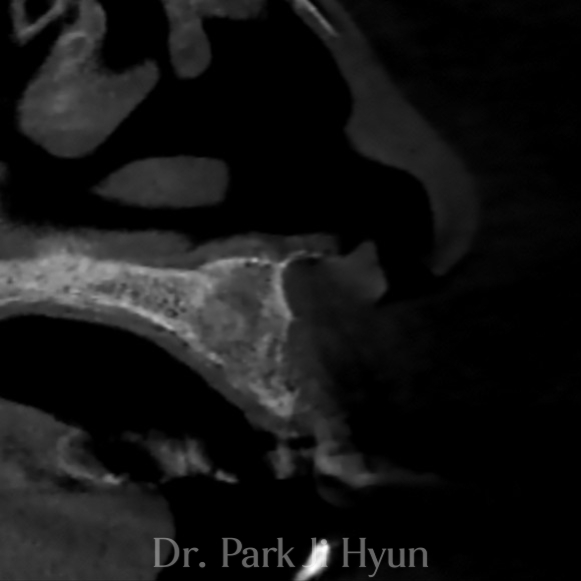
Upon reviewing the X-ray, the real problem wasn't the broken bridge.
Decayed tooth roots had remained for a long time in the area where the artificial tooth was placed.
The surrounding gum bone had collapsed, and pus was even emerging.
In such cases, it's difficult to save the tooth, and before more gum bone dissolves,
extraction and implant placement are necessary.
Here, we consider four solutions.

✔️ Extraction
✔️ Bone Grafting
✔️ Soft Tissue Grafting (Gum Grafting)
✔️ Implant Placement
How will these four be performed? In what order will they be arranged?
When explaining implants, I often use the analogy of building a house.
It's like deciding when to prepare the ground and when to erect the pillars
when building a house.
If the sequence is wrong, no matter how good the materials are,
the outcome will be unstable.
Doctor, can't it all be finished at once?
Occasionally, patients who are apprehensive about surgery
express a desire to complete everything in one go.
However, completing everything in a single surgery
does not always yield the best results.
I plan not based on performing fewer surgeries, but on the method that allows the patient to use the implant for the longest time without discomfort.
I plan not based on performing fewer surgeries, but on the method that allows the patient to use the implant for the longest time without discomfort.
Because the right path takes precedence over the fast path.
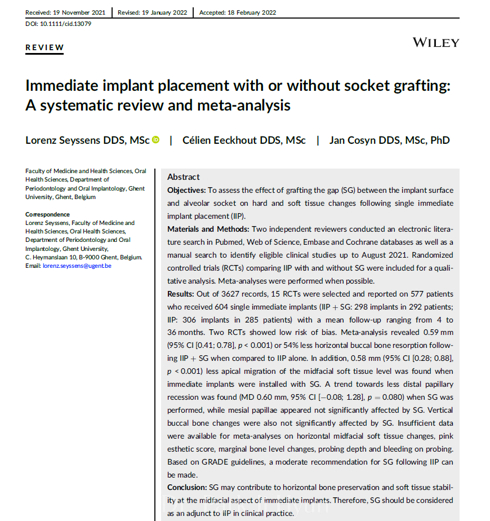
(Research shows that when bone grafting is performed simultaneously with immediate implant placement, outer anterior bone resorption is reduced by about half.)
Therefore, referring to criteria presented in various papers and well-established clinical knowledge,
when a tooth with good bone condition fractures, requiring extraction and implant placement,
simultaneous bone grafting and implant placement yield the best results,
so this method is used.
Temporary denture before surgery

Since the patient cannot go about with missing anterior teeth before surgery,
a temporary anterior denture was fabricated first.
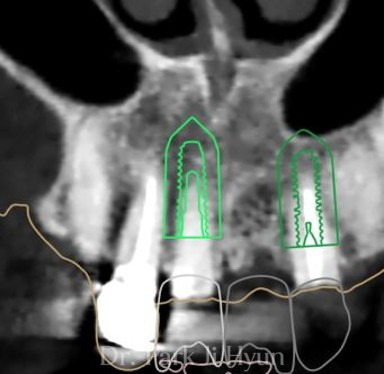
Subsequently, implants are placed using guided surgery,
that is, navigation implants.
Even a slight deviation of a few degrees in the angle of the front teeth can cause the shape of the prosthesis to be
misaligned.
Therefore, it is crucial to implant them exactly as planned.
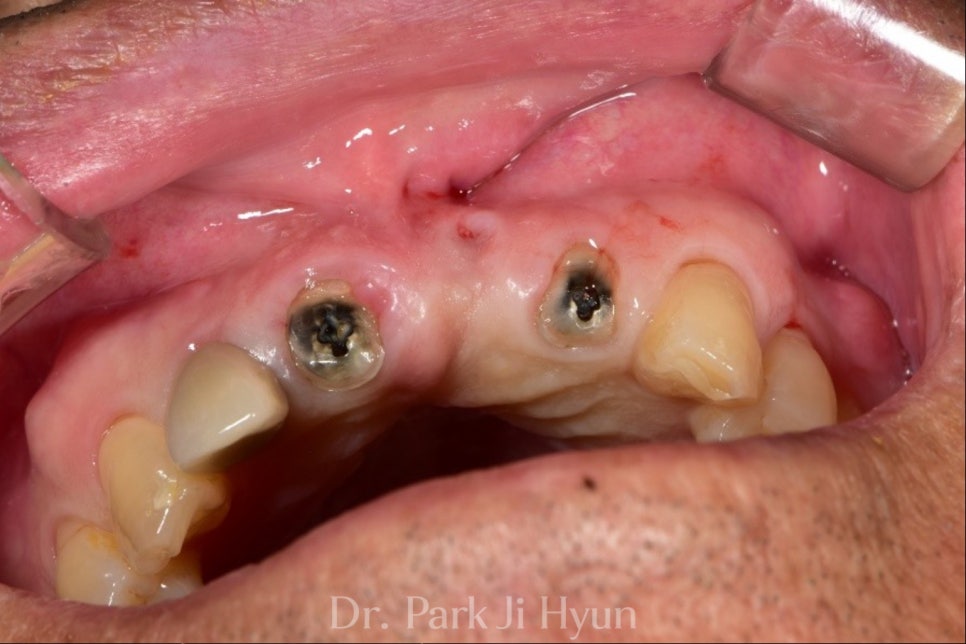

This surgery required a significant amount of bone grafting, but it was completed very cleanly.
Why is the fabrication of a temporary prosthesis necessary?
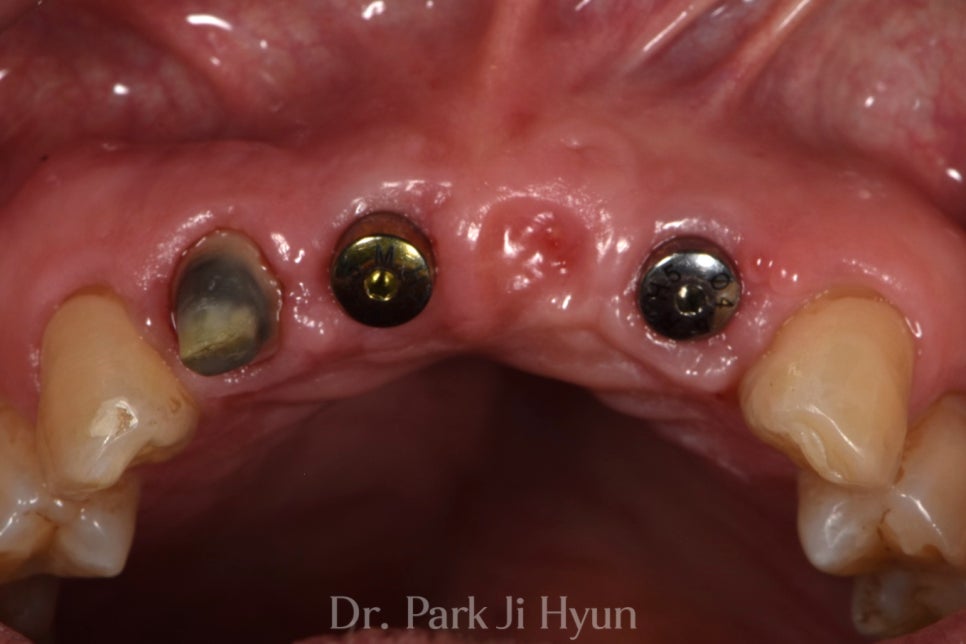
This photo was taken approximately 2 months later.
The gums have healed very cleanly and well.
After confirming the healing status, an impression was taken with a digital scan,
and then the temporary implant prosthesis
was fabricated.
To summarize the sequence so far in one line:
Fabrication of temporary denture > Implant placement > Confirmation of healing at the implant site > Fabrication of temporary prosthesis
This is the current progress.
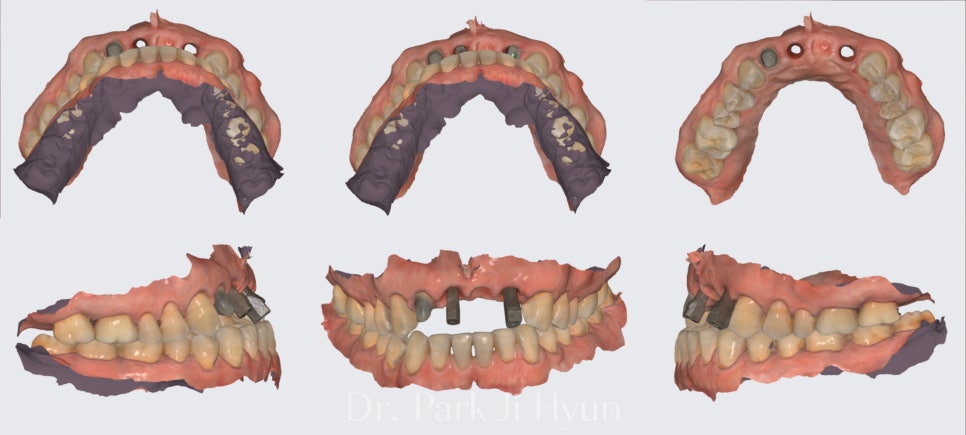
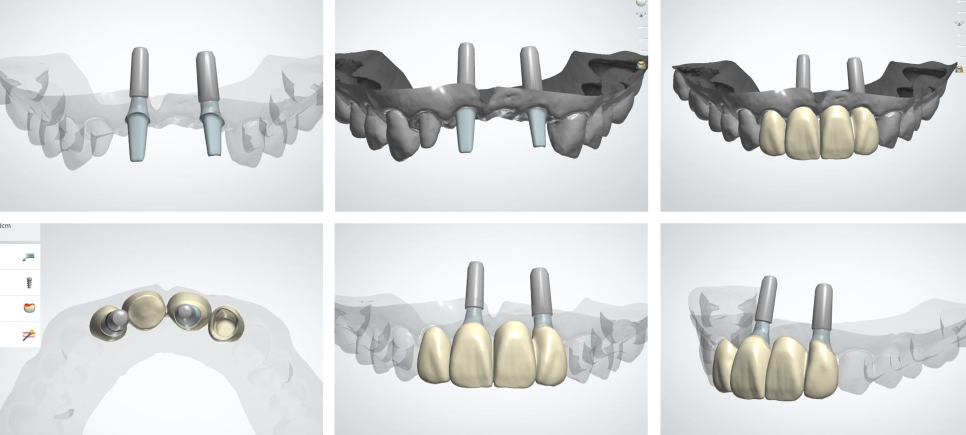
Is this process really necessary?
Some of you might wonder, but as explained in my previous posts,
the fabrication of a temporary prosthesis is essential for front teeth.
In addition, the shape of the canine tooth, which was tilted towards the palate,
also needed to be refined.
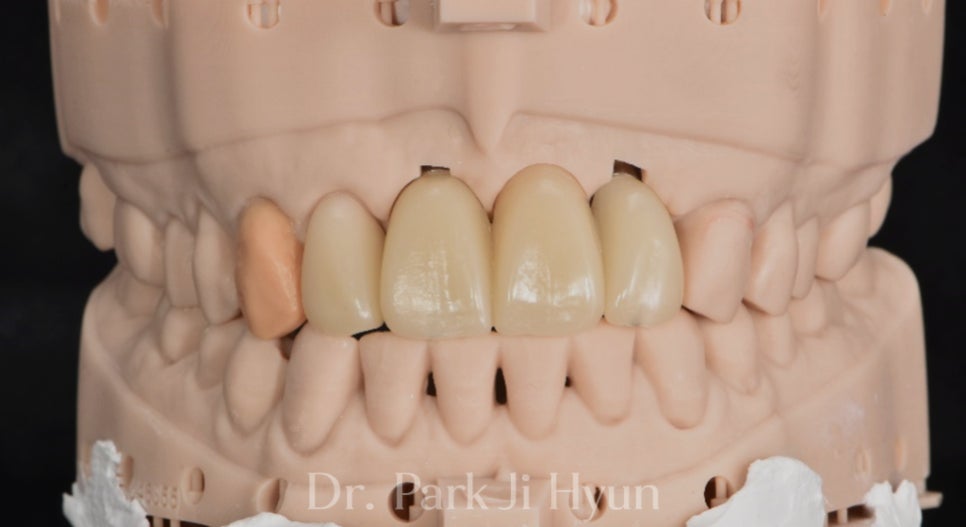
To avoid shaving healthy teeth, the shape was only supplemented with
no-prep veneers.
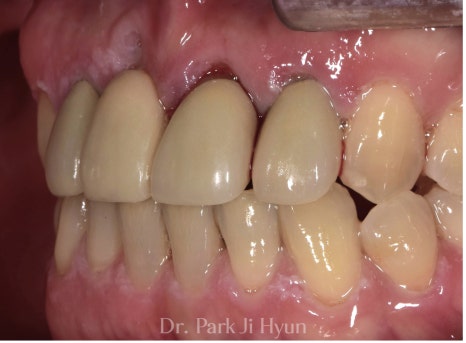
Gums continue to move even after the prosthesis is placed.
Even after the temporary prosthesis is placed, the gums continue to change.
Therefore, a period of gradually adjusting the temporary prosthesis to refine the gum shape
is absolutely necessary.
This process ensures that the gums embrace the prosthesis as if it were their natural place.
If this step is skipped, the final prosthesis may be well-made, but
the gum line will appear unnatural.
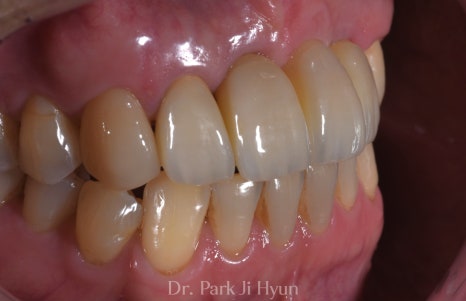
If you look at the photos in order, you will see the gums between the teeth gradually filling in.
What is the final result?
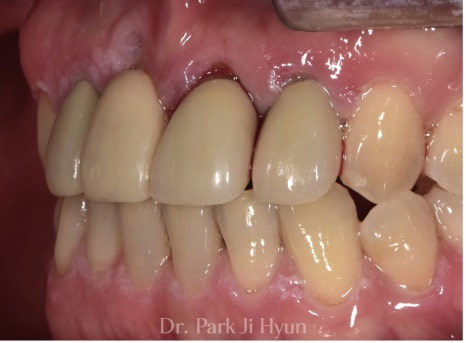
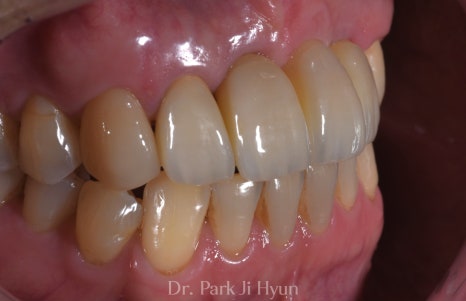
The prosthesis is naturally in place, and the gums are well-maintained and healthy.
Furthermore, the patient reported no discomfort when eating, such as biting food with their front teeth.
They also mentioned no discomfort.
Thus, the careful decision made in the initial diagnosis regarding the extraction, bone grafting, and implant placement
determines the long-term stability.
Thank you for trusting us. We start by designing the sequence.
As I began today's post, I mentioned that the front teeth are an honest area.
Being honest ultimately means there's nowhere to hide.
Any shortcomings in planning or moments of haste
will eventually become apparent in the front teeth over time.
That's why I spend the most time examining this area
and provide the most meticulous treatment.
Front tooth implants, from surgery to
prosthesis, must proceed without a single error under a thorough plan.
It is by no means an easy task, nor should it be approached lightly.
Therefore, if you are considering front tooth implants, I strongly recommend that you research thoroughly
and seek treatment from someone who has deeply studied
both cosmetic dentistry and implants.
I hope today's content was helpful. Dr. [Name], Chief Director of Seoul Yido Dental Clinic, Mapo.
This was Prosthodontist Dr. Jihyun Park.
Thank you.